Heart health in pregnancy

Heart health in pregnancy

Chest pain in pregnancy and/or afer your baby’s birth should never be ignored. Some chest pain can be serious and can lead to a heart attack, heart failure, cardiac arrest or even death. Most women do not suffer from these conditions during or after pregnancy but it is important to recognise the symptoms and, if you have any of them, to seek treatment quickly.

Pre-existing heart conditions

If you have a known heart condition, were born with a congenital heart defect or have been diagnosed with heart disease, you should tell your midwife/GP/cardiologist and they will monitor your heart health before, during and after pregnancy and your health.

Symptoms of health attack can include:

  • Central chest pain
  • Arm pain or numbness
  • Pain in the jaw, back or shoulders
  • Nausea
  • Sweating/clamminess
  • Breathing difficulties
Some people experience indigestion-like chest or throat pain that does not respond to indigestion remedies.

When should I contact the midwife or doctor?

If you feel unwell, contact your midwife or GP for guidance. If you experience some/all of the above symptoms, dial 999 and ask for an ambulance as your heart health needs to be investigated quickly. An ECG monitor and a troponin blood test should be carried out to find out if you have had a heart attack.

When am I more likely to have a heart attack?

You are more likely to have a heart attack if you:
  • have a family history of heart problems
  • have high blood pressure
  • have high cholesterol
  • smoke
  • drink excessively
  • are obese
Rarely, women with no risk factors or history of heart disease in their family will experience heart attack symptoms. Heart attack symptoms in pregnancy should never be ignored. Contact your midwife or GP for further advice.

Spontaneous Coronary Artery Dissection (SCAD) in pregnancy

Spontaneous Coronary Artery Dissection (SCAD) in pregnancy

SCAD is a rare but serious heart condition that causes a tear or bruise to develop in a coronary (heart) artery resulting in a blockage that prevents normal blood flow. It can cause heart attack, heart failure or cardiac arrest and can be fatal. SCAD can happen during pregnancy and during the weeks and months after you have given birth. Symptoms can include:
  • central chest pain
  • arm pain or numbness
  • pain in the jaw, back or shoulders
  • nausea
  • sweating/clamminess
  • breathing difficulties
Some people experience indigestion-like chest or throat pain that does not respond to indigestion remedies. If you experience some/all of these symptoms, call 111 or 999 and say you are worried about your heart.

Preventing and managing common complaints during pregnancy

Preventing and managing common complaints during pregnancy

What complaints are common during pregnancy?

Pregnant women may experience one or more of the following symptoms:
  • back, pelvic, buttock or hip pain
  • rib pain
  • leakage of urine when coughing or sneezing
  • aching legs/cramps/varicose veins/swollen ankles
  • numbness and tingling in the hands
  • fatigue (extreme tireness)

Why am I more likely to experience these common complaints during pregnancy?

Hormonal changes

From early on in your pregnancy your body produces high levels of certain pregnancy hormones (called ‘relaxin’ and ‘progesterone’). These work to soften ligaments and muscles, especially around your lower back and pelvis, preparing your body for pregnancy and labour.

Weight gain and postural changes

Your body adjusts to the weight gain during pregnancy by changing your posture, for example, the way you stand. This can result in increased strain through some areas of your body. Strain is often felt around your lower back or pelvis.

Muscular changes

Your abdominal (tummy) muscles act like a corset to support your spine. During pregnancy, they soften and stretch slightly to allow your baby to grow. This can make them less effective in supporting your back and pelvis. Other muscles may also stretch or weaken during pregnancy, including your pelvic floor muscles which help to control your bladder and bowels. All of these changes are normal and allow your body to adapt to being pregnant, but they can make you vulnerable to aches and pains. The advice on the following pages will help you to be aware of the changes occuring and how to take care of yourself during pregnancy.

What can I do to help prevent aches and pains?

Look after your back

Think about your posture Doing this throughout your pregnancy can help to avoid and reduce pain.

1. When you are standing:

Try to avoid your ‘bump’ pulling you forward and over-exaggerating the curve in your lower back:
  • Tuck your chin in
  • Pull your shoulders back and down
  • Gently draw your tummy button towards your spine
  • Squeeze your buttocks slightly
  • Keep your knees relaxed and soft

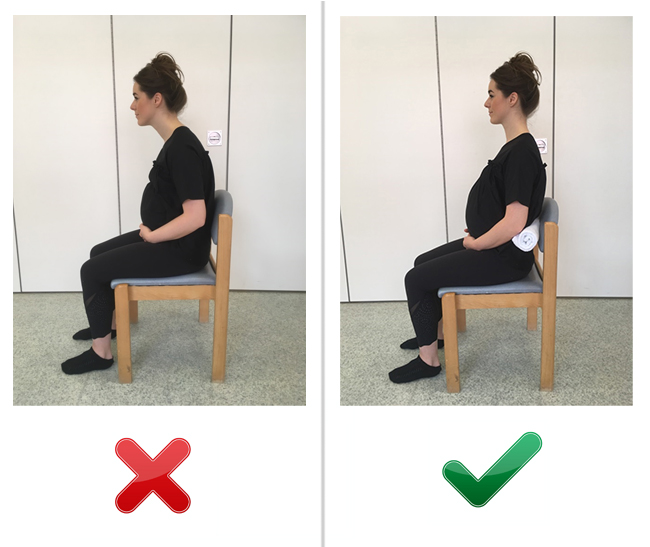
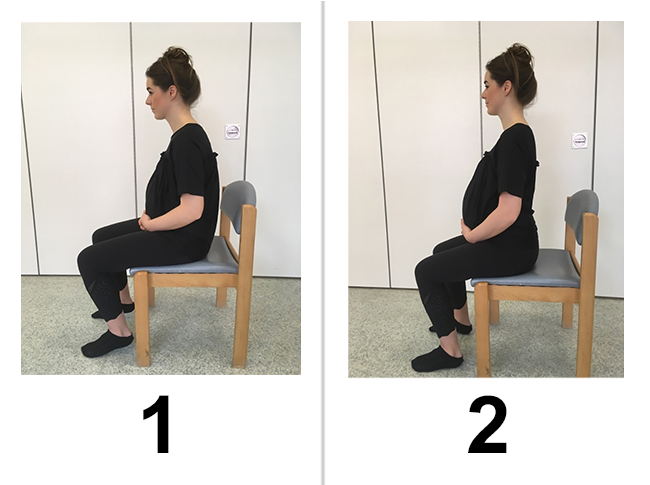
2. When you are sitting:

  • Try not to slouch
  • choose a chair that will provide your back with some support and ensure your bottom rests at the back of the chair. You may also wish to place a pillow or rolled up towel in the small of your back.
  • Make sure your feet are flat on the floor
  • try using a foot rest if they don’t quite reach. This will take the pressure off your spine.
  • As you stand up from a chair or bed, try squeezing your tummy and buttock muscles to provide extra support to your pelvis.

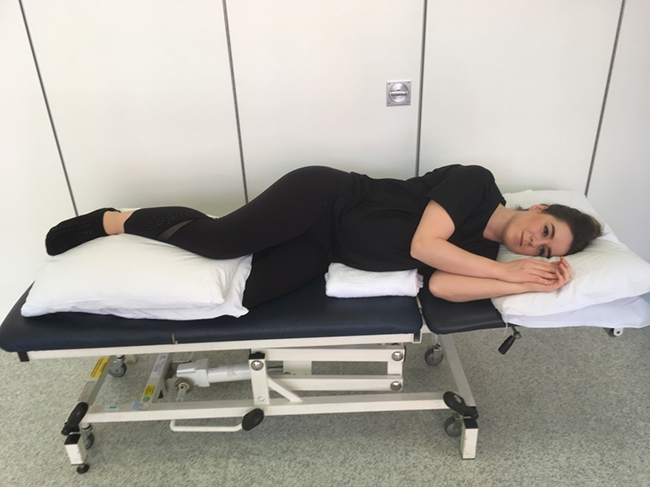
3. When you are lying down:

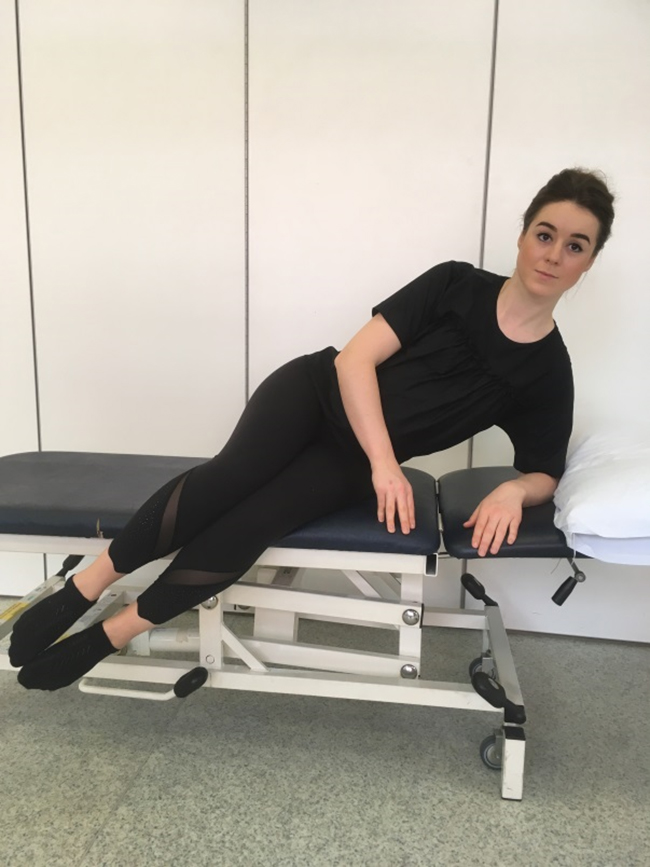
  • Lie on your side with a pillow between your knees (bending your knees comfortably).
  • You may find a pillow or small towel placed under your ‘bump’ supportive.
  • When turning from side to side, keep your kneeds bent and together, squeezing tummy and buttock muscle and moving in stages. Alternatively, turn onto all fours, keeping your buttocks clenched as you turn.

4. Geting in/out of bed

  • Bend your hips and knees together and remain on your side.
  • Squeeze your buttock and tummy muscles as you move.
  • Push up with your arms into a sitting position.
  • Do the reverse to get into bed or try climbing into bed on all fours.

5. What about lifting?

  • Where possible, cut down on activities that involve bending, twisting and lifting, such as picking up small children and vacuuming
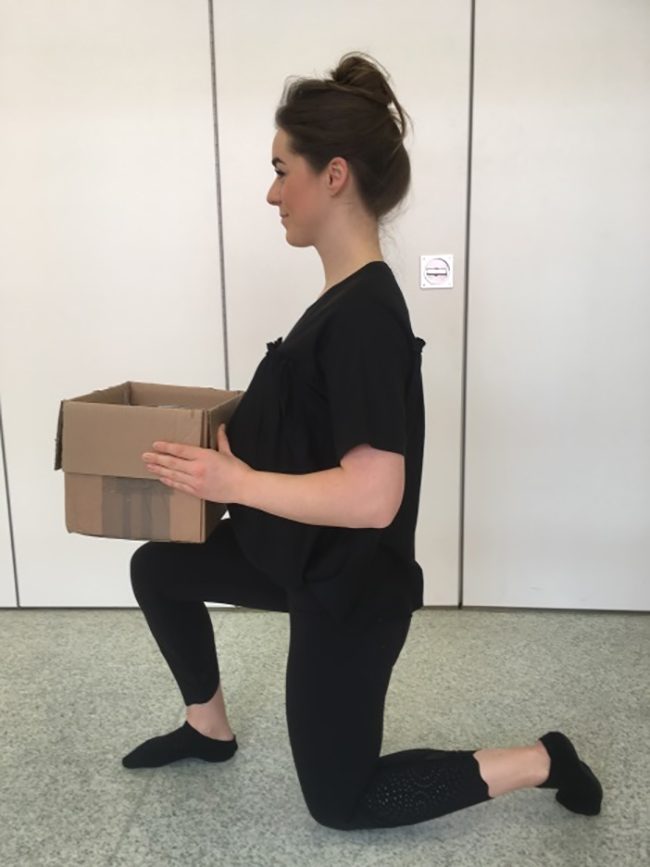
  • When lifting from the floor, bend down on one knee – see picture opposite
  • Keep a small stool to use in the kitchen to sit on instead of squatting down
  • Avoid lifting excess weight where possible – your body is already working hard to carry your baby
  • Shopping – try to avoid lifting out of deep shopping trolleys. When carrying larger loads, try to distribute the weight equally in each hand, or use a small backpack.

Tips for daily life

  • Footwear
  • avoid heels more than 1 inch in height and try to have flat shoes with a supportive arch as they can encourage good posture.
  • Dressing
  • sit down to get dressed. This avoids standing on one leg, which can aggravate pain.
  • Ironing
  • make sure the board is a waist level to avoid prolonged stooping. Alternatively, sit down to iron if possible.
  • Cooking
  • sit rather than stand when preparing food.
  • Getting into a car
  • sit down first, keep your knees togeher and then swing both legs in at the same time (or slowly move each leg). Reverse this to get out of a car.

Keep your tummy muscles strong

Your tummy muscles stretch during pregnancy to allow your baby to grow and this is normal. The following simple exercises are safe to do during pregnancy and can help relieve back pain and improve the strength and function of your lower tummer muscles. If you are unsure about any of the exercises, please speak to a physiotherapist before starting them.

Transversus abdominus (deep lower tummy muscle)

This muscle wraps around your lower tummy and back like a corset to support the area. To strengthen this muscle:
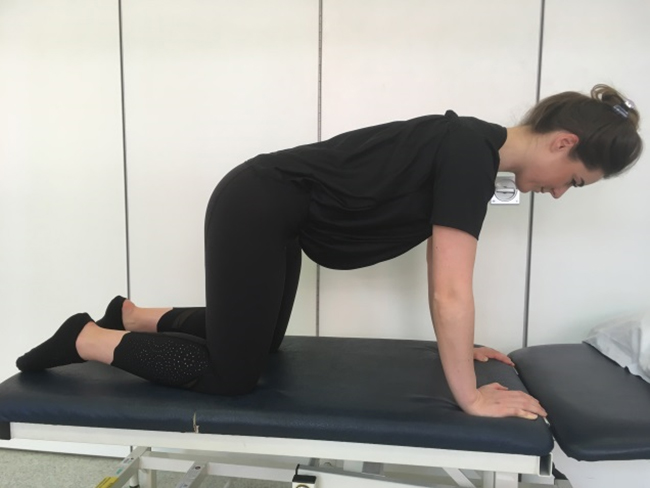
  • Begin on your hands and knees (all fours), keeping your shoulders over your hands and your hips over your kneeds – try to keep your back flat and still.
  • Breathe in, and as you breathe out, gently draw in your lower abdomen/tummy towards your spine.
  • Hold for 10 seconds, then release.
  • Repeat at least 10 times until fatigued.
  • Try to practice this two or three times a day.
You can also do this exercise lying on your side, or when sitting or standing. You can exercise this muscle effectively when you are walking around or lifting and carrying. Just draw your tummy in as if you were hugging your bump or wearing a bikini!

Pelvic tilting

  • Stand with your back against a wall, with your head, shoulders and bottom touching the wall.
  • Bend your knees, keeping your heels shoulder-width apart, feet slightly sway from the wall.
  • Pull your tummy button back towards your spine and tuck your bottom under until you feel your lower back flatten against the wall.
  • Repeat up to ten times and do the whole exercise three times a day.
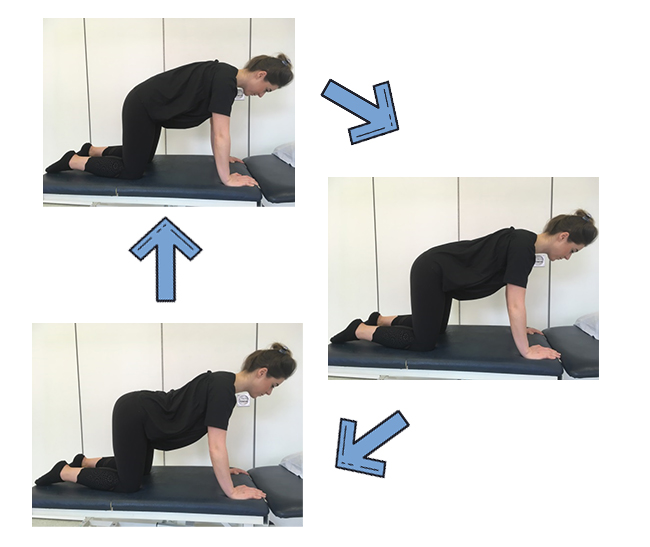
Alternatively, you can try doing this exercise in different positions, such as when kneeling, leaning on the bed, sitting (on a chair or exercise ball), or on all fours) see pictures 1-2 and a-c).

Keep your pelvic floor muscles strong

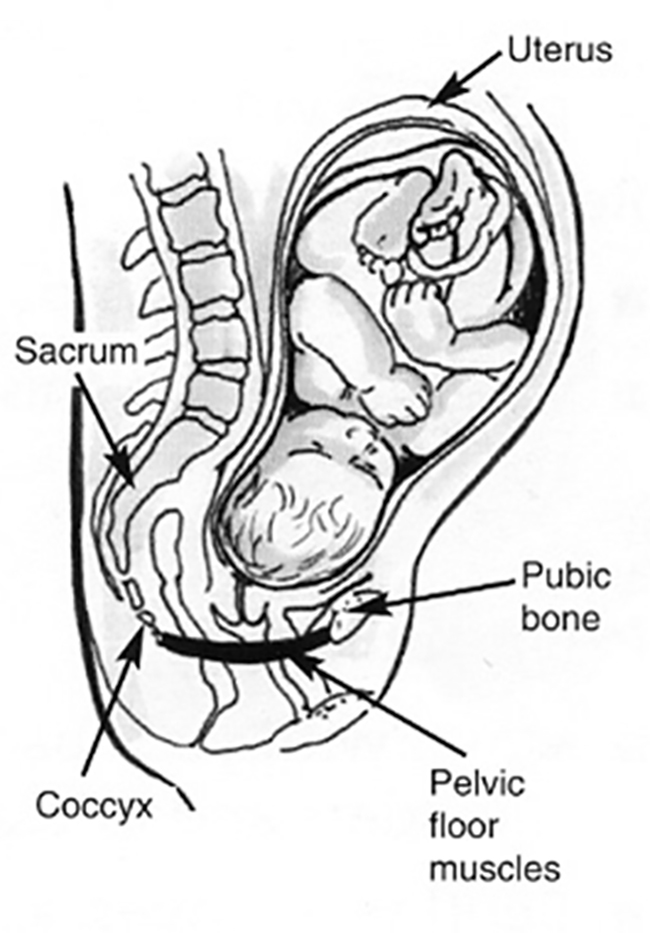
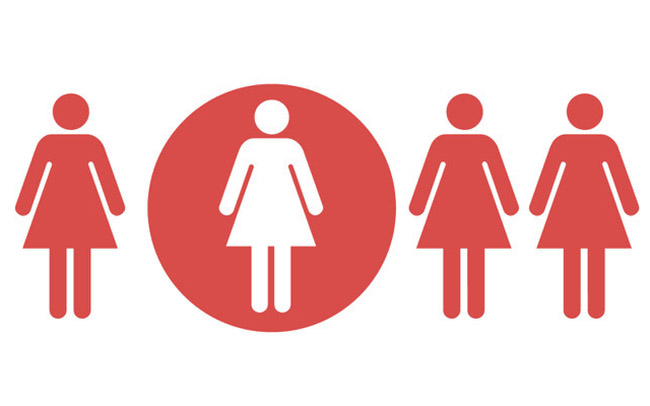
Your pelvic floor muscles lie between your public bone at the front and your coccyx (tailbone) at the back of your pelvis. They surround your anus, vagina and bladder openings. These muscles are like a platform that helps the pelvis to support the weight of your baby as it grows. They also maintain control of your bladder and bowels, and give support to the pelvic bones. During pregnancy, these muscles can be weakened by the weight of the baby, and are stretched during vaginal birth. Some women may experience leakage of urine when coughing and sneezing (known as ‘stress urinary inconinence’) as a result of weak pelvic floor muscles. This is a common complaint affecting one in three women, but it can be prevented, reduced and even resolved fully with regular pelvic floor exercises. It is highly recommended that all pregnant and postnatal women regularly exercise their pelvic floor muscles even if they have no problems with bladder control, to prevent problems in the future. To begin with, you may have to concentrate while doing the exercises, but as you become more confident, you could do them whilst watching television, standing in a supermarket queue or waiting for the kettle to boil.

Pelvic floor exercises

Imagine you are trying to stop yourself passing wind and then pull forward as though you are also trying to stop your flow of urine. This closes and draws up the back passage and vagina. You need to exercise this muscle in two ways:

1. Slow holds

Hold the muscle in for as long as you can for up to 10 seconds. Release slowly and rest for at least 5 seconds between each one. Aim to do 10 in a row.

2. Fast squeezes

Squeeze the same muscles but quickly, releasing straight away. Aim to do 10 in a row. You can do these exercises almost anywhere and anytime but not when passing urine. In the beginning you will find these exercises easier to do when lying down or sitting. To train these muscles during and after pregnancy, try to get into the habit of doing both of the exercises 3-6 times a day.

Other helpful tips

  • If you have swollen ankles or legs, make sure you spend some time with your feet up every day. Keep your feet moving and avoid crossing your legs. Wearing support stockings may help.
  • Sometimes women experience numbness and tingling in their hands. This can be due to excess fluid retention and often worse at night and first thing in the morning.
  • Try running cold water over your hands for a few minutes when you wake up – this helps improve circulation. Keep your hands moving, and massage your hands in the direction of your elbows. If this remains a problem, ask your midwife or GP to refer you to a physiotherapist.
  • It is hard work being pregnant, so listen to your body and rest when you need to. It is a good idea to spend some time relaxing regularly.

What about lower back and pelvic pain during pregnancy?

Lower back and pelvic pain during pregnancy are very common symptoms and are rarely due to a serious problem. Evidence suggests that 50% of women experience this pain during pregnancy. More than half of these women will complain that the pain impacts on their daily living. If you are starting to suffer from back or pelvic pain, make sure you are following all the advice and exercises previously listed on this page.

Pain relief

If your back continues to be painful, there are a number of other things you can do to help yourself. For example:
  • Put an ice pack (bag of frozen peas wrapped in a damp towel) or hot water bottle on the painful area for 1–15 minutes, several times a day. Avoid placing it directly over your abdomen (tummy) and protect your skin with a towel.
  • Relaxation and massage techniques can also help decrease the pain.
  • Keep active, as staying still for prolonged amounts of time can cause joints to become stiff and painful.
  • Talk to your pharmacist, GP or midwife about suitable pain relief to use during pregnancy.
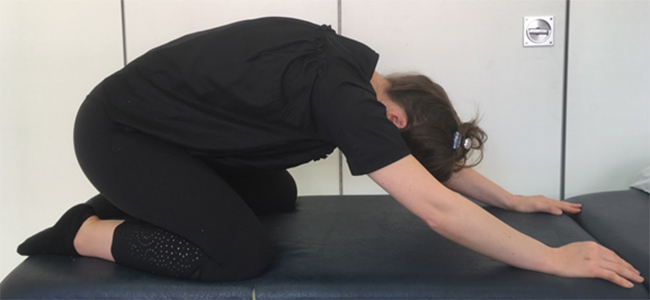
  • You may like to try this gentle stretch, which may help to relieve your lower back pain.
Remember – it is not usually the one time we lift awkwardly or stand badly that causes pain; it is often the continual stresses and strains we place on our body during our everyday activities. Therefore, it is important to modify your daily activities using the techniques in this booklet, do some of the gentle exercises we suggest and ensure you pace your activities throughout the day and week. Please ask your midwife or GP to refer you to a physiotherapist if you are still having difficulties with pain.

How can I stay active?

Start by exercising the parts of your body most under strain during pregnancy. your back, tummy and pelvic floor muscles all need regular exercise to remain strong. Gentle low impact exercise, such as walking, swimming, yoga and pilates, is safe and highly recommended during pregnancy. Exercise encourages the release of hormones called ‘endorphins’ which help you to feel good, sleep better and reduce pain. However, there are some rules to exercise during pregnancy:
  • We advise that you avoid contact sports such as hockey/netball.
  • Be sure you warm up and cool down to avoid injury.
  • Make sure you do not get too breathless and can still talk in full sentences.
  • Replace, reduce or stop high impact exercises such as running and jumping.

What is perineal massage and how can it help?

The perineum is the area between the vagina and the anus (back passage). Perineal massage is used to stretch the perineal tissue and scar tissue during late pregnancy. It may help to desensitise the area and reduce any pain. This may also help with a return to sexual relations.

How to perform massage

Prepare

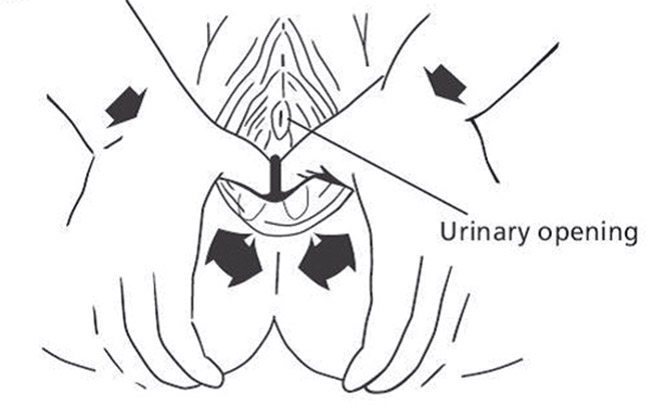
A mirror can help you to locate the area between the vagina and the anus so you know what you are doing. Imagine your perineum represents a clock face. Hands should be clean with nails clipped, Make sure your bladder is empty. Some women find having a warm bath beforehad can help relax and soften the tissue.

Position

Position yourself so that you are comfortable. You could try:
  • Squatting down (supporting yourself by leaning back against a wall or forwards on a bed or chair).
  • Sitting on the toilet
  • Standing with one foot raised on a chair/toilet
  • Leaning back or kneeling on all fours

Technique

Lubricate your fingers well using a vegetable oil (such as almond or olive oil). Insert one or two fingers up to 2 to 5 centimetres into the vagina. Massage the oil into the tissues of the perineum and inside the vagina. To prepare the tissues, start by pressing towards the anus and then use a firm sweeping movement down and to the back. Imagine your fingers are sweeping like clock hands from 3 to 9. Continue this for 2 minutes maintaining pressure throughout. Following this, apply a firm pressure at 5, 6 and 7 on the imaginary clock. Hold each stretch until you feel a burning, stinging sensation for approximately 2 minutes. This technique may be painful/cause stinging sensation – this is normal. Try working in a circular montion with your thumb or fingertip across the scar and concentrate on one area of the scar at a time. Begin with a gentle pressure and build up as you feel comfortable. Massage can also be performed in the bath without addition of any oils.

Frequency

Aim to practice the techniques 3-4 times per week for between 5-10 minutes. Massage may be continued until the area is desensitised and less painful.

Further information

NHS Choices – exercise in pregnancy Pelvic obstetric and gynaecological physiotherapy

Help and advice

If you have any concerns, or would like further advice, contact yoru local antenatal clinic, your community midwife or GP.

Acknowledgement

This content has been produced by the Department of Women’s Health Physiotherapy, Imperial College Healthcare NHS Trust and is used with permission.

Choosing a place of birth

Choosing a place of birth

Place of birth choices
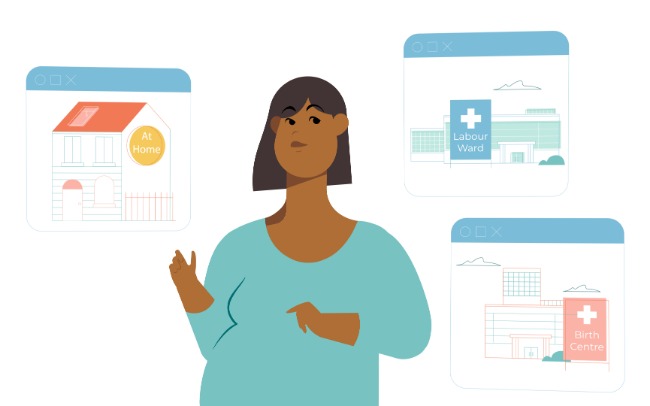
You can discover where you can give birth according to your preferences and needs – in a labour ward, in a birth centre or at home. Watch the video to learn about the different options. Your midwife at your chosen maternity unit or your doctor can help advise you on the best choice for you. Video credit: NHS North West London maternity services.

Sepsis during pregnancy

Sepsis during pregnancy

Infection in pregnancy and/or after your baby’s birth should never be ignored. Some infections can progress to a more serious situation known as sepsis, where the infection spreads to the blood stream and through the whole body. If left untreated sepsis can lead to shock, organ failure and death. Whilst most women do not suffer from infection or sepsis during or after pregnancy, it needs to be recognised and treated quickly if they do.

Signs of sepsis

The first signs of sepsis are usually a rise in your temperature, heart rate and breathing. You may also feel unwell, have chills and flu-like symptoms and a worrying pain in your tummy and/or diarrhoea. This can progress very quickly so it is important to seek advice if you are concerned about your health.

How can infection in pregnancy or after childbirth be prevented?

Good personal hygiene helps. This can include: daily showers/baths, proper hand washing and drying, perineal hygiene to include keeping the perineal area (between the vagina and back passage) clean, dry and frequent changes of maternity/sanitary pads. It is important to wash your hands before and after going to the toilet and changing maternity/sanitary pads.

When am I more likely to get an infection or sepsis?

Sepsis may happen in pregnancy or after your baby is born. The risk of getting an infection is increased in the following circumstances:
  • After having a miscarriage or an ERPC (ERPC – evacuation of retained products of conception is a surgical procedure to remove tissue from the womb)
  • Premature rupture of membranes (when your waters break long before your baby is due)
  • If your waters break more than 24 hours before your baby is born
  • If you develop a urine infection (UTI)
  • If your baby was born prematurely/early (before its due date)
  • After you have had your baby – this is the most common time for serious infection to develop; especially if you had your baby by an emergency caesarean section, by forceps or vacuum delivery, or if you had a perineal wound or an episiotomy).

When should I contact the midwife or doctor?

You should contact your GP or the maternity unit if you are worried, unwell and/or if you notice any of the following:
  • Pain/burning on passing urine or struggling to pass urine, this could be a symptom of a urinary tract infection
  • Vaginal discharge which may be foul smelling and/or an unusual colour, this could be a sign of a genital tract infection (vaginal/womb infection)
  • Abdominal pain that does not seem to be getting better with simple analgesia, this could be a sign of womb/wound infection or abscess
  • Chills, flu type symptoms or feeling faint and unwell
  • Fast breathing or shortness of breath
  • Fast heart rate
  • Persistent cough with or with sputum, shortness of breath or chest pain could be a sign of chest infection or pulmonary embolism (blood clot in the lung)
  • A wound that is not healing well, broken down or is red
  • Severe pain in one area of breast
  • Diarrhoea
  • Sudden increase in vaginal bleeding (after your baby is born).
Contact the maternity unit where you gave birth, your midwife or GP for urgent advice. For more information:

Introducing a sibling to your new baby

Introducing a sibling to your new baby

There are no rules about when you tell an older child that a new baby is on the way, but opinion suggests it is wise to do so when you tell others so they hear it from you directly. A small child will find it difficult to visualise what this will mean for them so using books or pictures can help, or by reference to other friends who may have had a new brother or sister recently. Provide whatever information is needed within the child’s level of understanding. As the pregnancy grows, spending time to “talk” to the baby together enables the older child to make a connection and feel the baby kick (“talk back”). Bringing home a newborn is a little different the second time around. With your first child, you’re focused on figuring out how to care for a baby. With the second baby, you’re likely to wonder how your older child will react to having a new sibling. The links below offer useful advice on how to handle this transition.

Domestic abuse

Domestic abuse

Domestic abuse may start or get worse during pregnancy or after giving birth. Domestic abuse includes a range of behaviours including: emotional, psychological, financial, sexual and physical abuse. A person choses to use this abusive behaviour in order to control their partner, ex-partner or family member(s) and it endangers the woman and her unborn child. The abuse is never the fault of the victim/survivor. If you feel afraid of your partner, ex-partner or family member(s), or change your behaviour as you are afraid of how they might react, you may be experiencing domestic abuse. Domestic abuse is not something you need to manage alone. If you want to access support for domestic abuse, some options are:
  • Contacting your local Independent Domestic Violence Advisor service
  • Speaking to a domestic abuse helpline: 24 hour National Domestic Violence Helpline: 0808 2000 247 Men’s Advice Line: 0808 801 0327 National LGBT+ Domestic Abuse Helpline: 0800 999 5428
  • Speaking to your Midwife, GP or Health Visitor
In an emergency, you should contact 999. The Silent Solution is a police system used to filter out large numbers of accidental or hoax 999 calls. It also exists to help people who are unable to speak, but who genuinely need police assistance. You will hear an automated police message, which lasts for 20 seconds and begins with ‘you are through to the police’. It will ask you to press 55 to be put through to police call management. The BT operator will remain on the line and listen. If you press 55, tap or make a noise, they will be notified and transfer the call to the police. If you don’t do any of the above, the call will be terminated after 45 seconds. If you pressed 55, a police call handler will announce that you are through to the police. If you can’t speak, you will be asked to tap the phone, make a noise or press 55. The police call handler will try a number of ways so that you do not feel under pressure to carry out just one prescribed action. Only by pressing 55, tapping the phone, coughing, or making noise are you guaranteed a response to your call from a police call handler despite your silence. It is much easier to speak to the operator. But if you must stay silent, a mechanism has been provided that you can use to acquire help regardless. Pressing 55 will not bring emergency services to your door and does not allow the police to track your location. By choosing to stay on the line, you are informing the police call handler that you might have an emergency that keeps you from talking, and they will do everything they can to determine your location so they can deploy officers to you. The police call handler will try and engage with you, if you remain silent they will attempt to engage further and ask you to tap the phone if you are unable to speak; for example, yes and no questions can be asked by the call handler and answered using one keypad press for yes and two for no. If the police call handler has concerns about your safety, they will continue to try to communicate through sound. If you are able to speak without putting yourself in danger, the police call handler will ask just yes and no questions if necessary. In some cases, the conversation is led by the caller, who sometimes tries and speaks to the police call handlers in code, if for example the perpetrator has reappeared. If you can say only one thing, please say your location. If you call from a mobile, we can pin point an estimate location but this does not narrow down enough to provide data we can locate you on. Police call handlers can request subscriber checks and can carry out background checks to assist in locating you. This can depend on whether you have contacted the police before. Also, if your phone is registered to you, it could determine whether this will provide a potential location for you. The police call handlers will deal with calls on a case by case basis, as each call is different, and the style of the call is adapted in line with the circumstance. If you feel you are perpetrating abuse against your partner, ex-partner or family member(s), you can contact: Respect Helpline: 0808 802 4040
Portal: Domestic abuse

Female Genital Mutilation (FGM)
Female Genital Mutilation (FGM)

What is FGM?

FGM is sometimes called female genital cutting or female circumcision. The definition of Female Genital Mutilation is “any cutting or damage to the external female genitalia that was carried out for non-medical reasons.” It is a form of child abuse and is a cultural practice that is illegal in the U.K. FGM is carried out in many parts of the world including Africa, Asia, the Middle East as well as among certain ethnic groups in Central and South America. Through migration of peoples it is also found in Europe, USA, Canada, Australia and New Zealand.

What are the different types of FGM?

The World Health Organisation (WHO) estimates that 200 million women and girls worldwide have been affected by FGM. WHO has classified 4 Types of FGM: Type 1: part or all of the clitoris and/or clitoral hood has been removed. Type 2: part or all of the clitoris and/or clitoral hood has been removed, as well as the inner labia (lips that surround and protect the urine hole and vaginal opening). Type 3 (pharaonic circumcision): the labia or Inner lips have been removed and the remaining edges are then sewn together or fuse together forming a layer of scar tissue with a small single opening at one end. Type 4: any other harmful practices to a woman’s genitals such as pricking, piercing, stretching or burning.

Possible health problems resulting from FGM

  • urinary infections
  • vaginal infections
  • painful periods
  • painful sex
  • feeling sad, anxious or depressed
  • problems during childbirth.

FGM and pregnancy

In pregnancy all women will be asked about FGM. Women with FGM should have a appointment with a specialist Midwife or Doctor in order to make a personalised plan of care as FGM may have physical and/or psychological consequences that can affect your pregnancy or labour. A safeguarding risk assessment will be carried out to ensure that, if you have a baby girl, she will be protected from FGM.

FGM and UK law

In the UK, it is against the law:
  • for anyone to carry out FGM
  • to take girls or women who live in the UK to another country to carry out FGM
  • to help someone else carry out FGM (this includes making travel arrangements)
  • to sew women up after childbirth (known as reinfibulation).

Women with FGM

If you thing you have FGM tell your midwife. She will refer you to a clinic where you will be given support by a FGM specialist midwife.

How can I protect my daughter/s?

The following resources are helpful: NSPCC/FGM Helpline: 0800 0283550 Police (emergency): 999 Non emergency: 101 Foreign and Commonwealth office (if abroad): 00 44 207 0081500