enquire how you are feeling and if you have any concerns
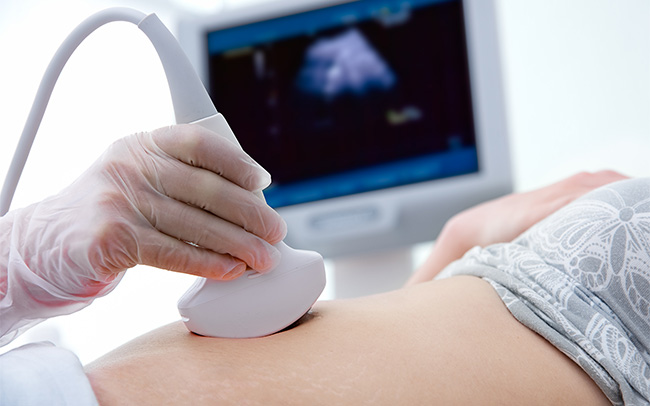
tell you exactly how many weeks pregnant you are, and work out your estimated date of delivery
check your baby is growing healthily and in the right place in the womb
take a specific measurement to screen for chromosomal syndromes (such as Down’s syndrome), if you have consented to be tested for this as part of combined screening
be able to reassure you and, if required, signpost you to appropriate services.
Your baby grows faster than at any other time in the first 12 weeks. The fertilised egg implants in the womb and divides rapidly into layers of cells.Morning sickness is common at this stage, and may occur at any time of day. You may also experience breast tenderness, tiredness, mood swings and changes in your reaction to certain smells and foods along with a metallic taste in your mouth. During this time you may experience some spotting or slight vaginal bleeding, which is nothing to worry about. Some women experience no obvious signs or symptoms of pregnancy – everyone is different. Symptoms can also come and go on a daily basis, and this is perfectly normal.You won’t feel your baby moving at this stage, nor will you have an obvious baby bump. The first movements are normally felt between 16 and 24 weeks.You will have your first appointment with your midwife by 10 weeks. You will also be offered some blood tests. Your midwife will explain all screening tests to you in full. Your first ultrasound scan should be offered to you between 11 and 13 weeks.
Finding out you are going to become a parent can be an exciting but daunting time. The closer you are to your pregnant partner, the more you’ll be able to share the experience of pregnancy and birth.
Early pregnancy
Whether the pregnancy was planned, or it is unexpected, it is normal to feel a range of emotions when you discover your partner is pregnant. Talk to your partner, friends and family about how you are feeling. Your partner may be irritable about things that seem small to you; this is due to the effect of hormones on her mood, and her own fears and anxieties.Be patient and learn to support each other and encourage her to talk to those close to her, or her midwife/doctor. Learn about the screening tests and scans offered in pregnancy. These tests can have implications for you, your partner and the pregnancy as it progresses.
During pregnancy
Attend antenatal classes with your partner (most classes are designed for both mum and partner) as these will help you feel prepared for the birth and caring for the new baby when he/she arrives. Increase your share of the housework, if possible. If you smoke, now is a great time to stop due to the risks of passive smoking on your partner and your baby after birth. Unborn babies that are exposed to smoke are at a greater risk of complications during pregnancy, such as not growing well or even being stillborn. After birth, even if you smoke outside, there is an increased risk that your baby will be affected by Sudden Infant Death Syndrome. Ask your GP for help to stop smoking.Support your partner as much as possible, but also find time for yourself to relax. Take pictures with your partner and her growing pregnancy bump, if she likes, as these make great memories. Try bonding with your baby by talking or singing to him/her during pregnancy.
You can roughly work out when your baby is due using the date of the first day of your last period (LMP). After your first ultrasound scan your due date may change a little; this is quite common.
5 weeks:
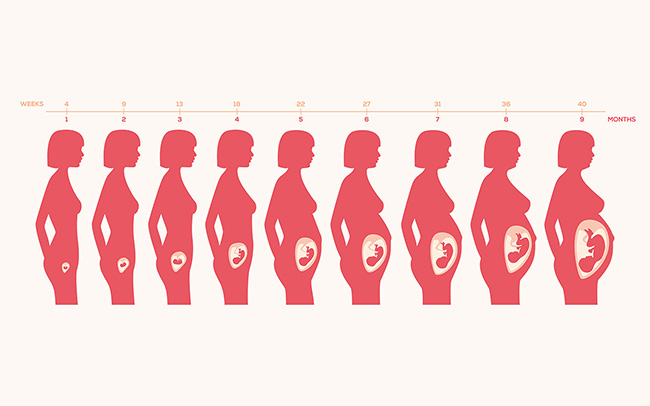
By the end of the 5th week after fertilisation or 7 weeks gestational age, the baby is known as an “embryo” and is approximately 12.7 millimetres long. The brain, spinal cord, and nervous system are more developed. The head had increased in size, and the nostrils, lips, and tongue are visible. The limb buds have grown into arms and legs.
6 weeks:
By the end of the 6th week after fertilisation or 8 weeks gestational age, the embryo is approximately 22 millimetres long. The head is quite large in comparison to the trunk. External ears form elevations on either side of the head. A skeleton made of cartilage, not real bone, has appeared; and a tail is apparent at the end of the spinal cord. Fingers and toes have formed.
9 weeks:
By the end of the 9th week after fertilisation or 11 weeks gestational age, the baby looks more human. It measures almost 5 centimetres in length and weighs approximately 4 grams. Most of the major structures have formed. Development now consists of the growth and maturing of present structures. The scrotum has appeared, as have fingernails, toenails and hair follicles.
12 weeks:
By the end of the 3rd lunar month, or 12 weeks gestational age, the baby is over 2.5 inches in length and weighs 7 grams. You may hear the baby being referred to as a “fetus” by healthcare professionals. The face is well developed, with the eyelids present, though fused. The baby can move the muscles of his face to squint, purse his lips, and open his mouth. The arms, hands, fingers, legs, feet, and toes are fully developed. The external genitalia show definite signs of male or female sex. The baby can make a fist and kick with his feet, although you won’t be able to feel it yet. The uterus can be felt just above the woman’s pubic bone.
16 weeks:
By the end of the 4th lunar month, or 16 weeks gestational age, the baby is almost 12 centimetres long and weighs 100 grams. The essential body systems are now present; most of the remaining changes will be in size. To facilitate this growth, the placenta is also growing rapidly. The baby’s skin is getting thicker and less transparent, and is forming several layers. Eyebrows and eyelashes are evident. The baby may suck his thumb, and he may swallow amniotic fluid and then pass it out as urine. Meconium, the baby’s first bowel movement, is beginning to collect in his intestinal tract.Some women feel the first faint fluttering movements between their pubic bone and navel. These movements are often initially confused with gas, but the feeling is known as “quickening”, the earliest felt movements of a baby. Usually, quickening is first perceived between the 16th and 18th weeks, although this can vary from person to person.
24 weeks:
By the end of the 6th lunar month, or 24 weeks gestational age, the baby is almost 28 centimetres and weighs 500 grams. Vernix caseosa, a cheese-like coating that protects the baby’s skin from its watery environment, has developed. The eyes are open, and the fetus can hear. Fingerprints and footprints have formed. By this time you should be able to feel regular fluttering movements. You should inform your midwife if you have not felt any movements by 24 weeks.
28 weeks:
By the end of the 7th lunar month, or 28 weeks gestational age, the baby is close to 33 centimetres long and weighs about 900 grams. The eyes can perceive light, and the baby can hear, smell, taste, and respond to touch. The baby has definite awake and sleep periods.
32 weeks:
By the end of the eighth lunar month, or 32 weeks gestational age, the average baby is 38 centimetres long and weighs 1,500 grams or more. The skin is still red but is less wrinkled, and the fingernails are long.
36 weeks:
By the end of the 9th lunar month, or 36 weeks gestational age, the baby is almost 43 centimetres long and weighs between 2160 grams and 2,500 grams.During the last 2 months of gestation, the baby gains about 25 grams of weight a day. This weight gain is important because it provides the baby with a layer of fat under his skin that will help keep his body temperature constant outside the uterus. The skin has become smoother, and the redness has faded to pink. Most of the lanugo has dropped off, remaining only on the arms and shoulders. (Lanugo is the first hair that grows out of your baby’s hair follicles while they are still developing in the womb.) The lungs are maturing getting ready for respiration.
40 weeks:
By the end of the tenth lunar month, or 40 weeks gestational age, the baby’s brain has greatly increased in number of cells. This growth will continue for the first 5 to 6 months after birth. By now, 96% of all babies are positioned head down. During the final 2 to 4 weeks of gestation, the head or other presenting part settles down into the top of the woman’s pelvis. During his last lunar month, the baby gains around 200 grams per week and, by the fortieth week, is an average of 50 centimetres in length and averaging 3 to 3.5 kilograms in weight. The baby is ready to be born.
42 weeks:
By the time the baby reaches 42 weeks gestation they are considered postmature. It means a baby’s skin may be temporarily dry, cracked, peeling, loose, or wrinkled because the protective cheesy vernix was shed weeks ago. He may have longer finger and toe nails and longer hair. Provided the placenta is functioning well, the baby will continue to gain weight.Pregnancy is normally between 37 and 42 weeks in length (from the first day of your last period), which is typically known as around nine months – although it is actually a little more than that. You may hear your pregnancy described in three sections, commonly referred to as trimesters:
1st trimester (1-12 weeks)
2nd trimester (13-28 weeks)
3rd trimester (29 weeks to the birth).
Once your due date is confirmed, you can enter it on the Home page, or into the About me section in this app.
Once you know that you’re pregnant, you can complete a self-referral form for maternity care. You can do this without seeing your GP, if your maternity unit is already set up to do this – simply choose your maternity unit in the app and follow the self-referral link. If there is no self-referral link, speak to your GP surgery who will help you start your maternity care.It is important to have an appointment with your GP if:
you have any medical conditions or you are taking any regular medications. Please do not stop or change any prescribed medications without medical advice from your GP
your pregnancy wasn’t planned, or you are unsure about carrying it on and what your options might be.
Your pregnancy care (known as antenatal care) will consist of a set of scheduled appointments with a midwife and/or specialised doctor (if needed).If you are thinking about a homebirth you will need to book your pregnancy at your closest maternity unit so that local midwives can provide you with care in labour at your home.

 Your care provider will: