It may seem strange to be thinking about contraception whilst you are pregnant.
However research has shown that many couples resume sexual intercourse within
six weeks of the birth of a baby, increasing the likelihood of another pregnancy within twelve months. Did you know that it is possible to become pregnant 28 days after
birth, even before your period returns?Pregnancy intervals of less than one year are associated with a higher risk of
complications such as pre-term birth, low birth weight, babies that are small for gestational age and neonatal death. Family spacing can improve your physical and
mental health enabling you to achieve optimum health before you conceive again.Take some time to speak to your midwife or doctor about the options available to
you, some of which may be available immediately after the birth of your baby.
This is a procedure in which a doctor, or specialist midwife attempts to the turn the baby into the correct position using gentle pressure on your abdomen with their hands.ECV is successful in about 50% of women and is generally safe. One in every 200 babies will need to be delivered by emergency caesarean after an ECV, and your baby will be monitored before and after the procedure to ensure they remain well.
Moxibustion for breech babies
This is a traditional Chinese technique which can be used to turn breech babies. It is done by burning a moxa-stick (a tightly packed tube of dried herbs) between the toes from 34-36 weeks of pregnancy. It has no known negative side effects and evidence suggests it can be successful at turning a breech baby (see here). You can ask your midwife or local acupuncturist for more information.
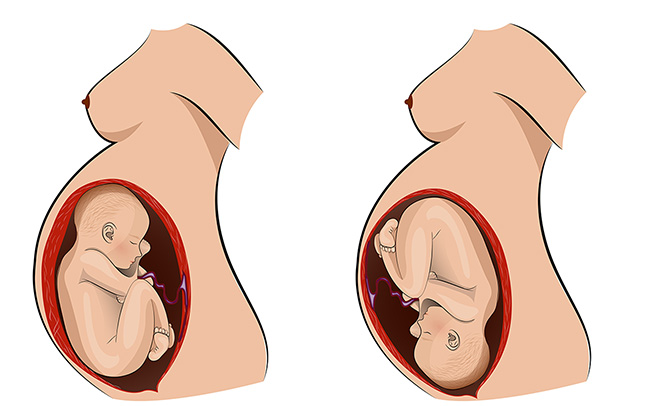
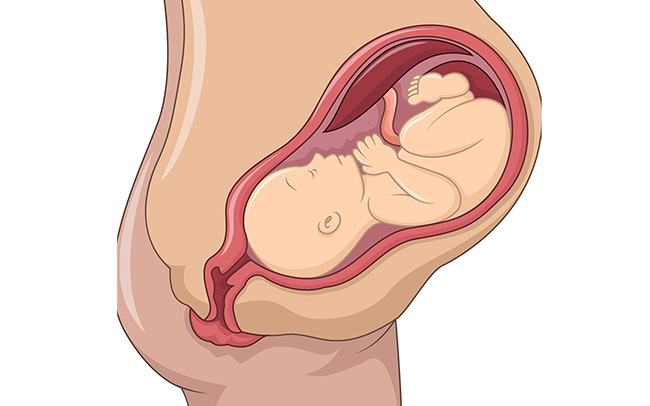
From 36 weeks pregnant, your baby should turn to the head down (cephalic) position in preparation for birth. A small number of babies will not be in this position, and may be either breech (bottom first) or transverse/oblique (lying sideways across your abdomen). If your midwife suspects that your baby is not in the head down position, you may be offered a scan and appointment with a doctor/specialist midwife to discuss your options. These options can include either attempting to turn your baby (see related links below), vaginal breech birth or planned caesarean birth.If your baby isn’t head down, don’t worry – there are many options available to you and your team will help you to make any decisions regarding your care moving forward.
When you choose to stop work is a matter of personal preference, but it is worth considering your commute, your working environment, your proximity to your maternity unit and allowing time to prepare for your baby’s arrival. You can discuss this with your midwife or doctor.Towards the end of pregnancy you may feel quite tired and uncomfortable, and therefore may need help from friends or family to get things done, particularly if you have other children. It’s important to stay active but to also make time for rest, particularly if you aren’t sleeping too well.
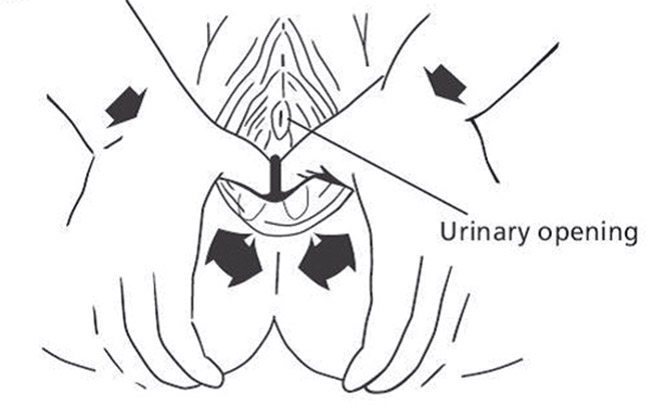
Massaging the perineum (the area between the vagina and anus) in the later weeks of pregnancy has been shown to reduce the likelihood of tearing during birth, and of needing stitches or an episiotomy. You can start this from when you are 34 weeks pregnant and practice it daily/every other day until the birth of your baby.How to massage your perineum:
wash your hands
sit comfortably with your legs bent at the knees so you can reach your perineum easily. Use a mirror if you wish
massage oil (preferably vegetable-based) into the skin of the perineum using fingers and thumbs
place one or both thumbs inside your vagina and press downwards towards the anus. Move to each side in a U-shaped stretching movement. This may give a tingling/burning sensation
aim to massage the area inside the vagina, not necessarily just the skin on the outside
Towards the end of pregnancy, you may feel a variety of different emotions as the birth becomes closer. You may feel excited, anxious or even scared – this is all normal. There are things that you can do to help you prepare for birth.


 It may seem strange to be thinking about contraception whilst you are pregnant.
However research has shown that many couples resume sexual intercourse within
six weeks of the birth of a baby, increasing the likelihood of another pregnancy within twelve months. Did you know that it is possible to become pregnant 28 days after
birth, even before your period returns?
Pregnancy intervals of less than one year are associated with a higher risk of
complications such as pre-term birth, low birth weight, babies that are small for gestational age and neonatal death. Family spacing can improve your physical and
mental health enabling you to achieve optimum health before you conceive again.
Take some time to speak to your midwife or doctor about the options available to
you, some of which may be available immediately after the birth of your baby.
It may seem strange to be thinking about contraception whilst you are pregnant.
However research has shown that many couples resume sexual intercourse within
six weeks of the birth of a baby, increasing the likelihood of another pregnancy within twelve months. Did you know that it is possible to become pregnant 28 days after
birth, even before your period returns?
Pregnancy intervals of less than one year are associated with a higher risk of
complications such as pre-term birth, low birth weight, babies that are small for gestational age and neonatal death. Family spacing can improve your physical and
mental health enabling you to achieve optimum health before you conceive again.
Take some time to speak to your midwife or doctor about the options available to
you, some of which may be available immediately after the birth of your baby.