Ultrasound scans
 It’s important to remember that scans are another kind of test to confirm the health of your baby.
Ultrasound is a medical examination. Sonographers need to be able to concentrate and as such it is not recommended that young children attend.
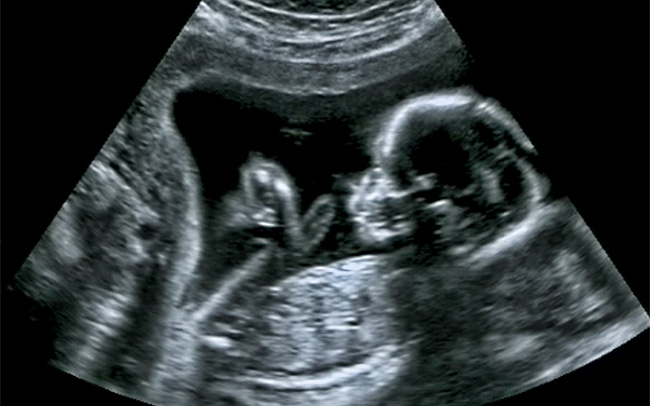
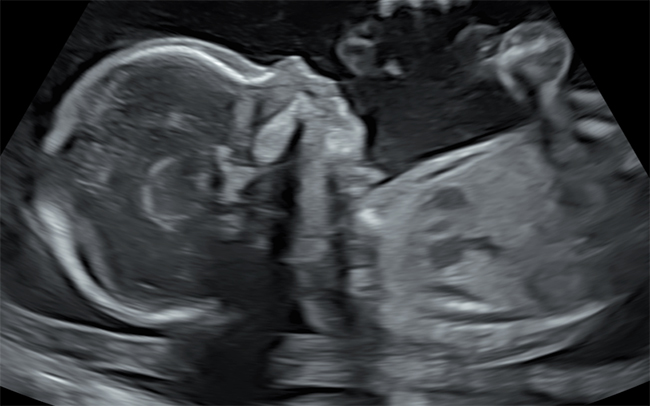
You will normally be offered two scans in pregnancy. The first is known as the dating scan at around 12 weeks of pregnancy and the second (sometimes called the anomaly scan) is performed at around 20 weeks gestation. This second scan will look in detail at your baby’s bones, heart, brain, spine, face, kidneys and stomach.
It is important to remember that the scan cannot find everything that could be of concern about your baby. The quality of the images depends on several factors, including body mass index and fibroids.
If you wish to know the sex of your baby, you can ask the sonographer, although it isn’t always possible to see clearly.
All pregnant women in the UK are offered antenatal screening tests. A screening test in pregnancy cannot give you a yes/no answer as to whether your baby has a condition. It can only tell you what the chances are of your baby being affected. Screening tests in pregnancy include blood tests and ultrasound scans (ultrasound scans can suggest there might be a condition (as in screening for Down’s syndrome) or confirm there is a condition (as in diagnosing spina bifida)).
It’s important to remember that scans are another kind of test to confirm the health of your baby.
Ultrasound is a medical examination. Sonographers need to be able to concentrate and as such it is not recommended that young children attend.
You will normally be offered two scans in pregnancy. The first is known as the dating scan at around 12 weeks of pregnancy and the second (sometimes called the anomaly scan) is performed at around 20 weeks gestation. This second scan will look in detail at your baby’s bones, heart, brain, spine, face, kidneys and stomach.
It is important to remember that the scan cannot find everything that could be of concern about your baby. The quality of the images depends on several factors, including body mass index and fibroids.
If you wish to know the sex of your baby, you can ask the sonographer, although it isn’t always possible to see clearly.
All pregnant women in the UK are offered antenatal screening tests. A screening test in pregnancy cannot give you a yes/no answer as to whether your baby has a condition. It can only tell you what the chances are of your baby being affected. Screening tests in pregnancy include blood tests and ultrasound scans (ultrasound scans can suggest there might be a condition (as in screening for Down’s syndrome) or confirm there is a condition (as in diagnosing spina bifida)).
- Results are most often reported as a statistical chance and sometimes the terms “increased chance” or “low chance” will be used.
- The terms “risk” and “chance” refer to the possibility of an event happening. For example, a chance of 1 in 100 means that out of 100 women with this result, 1 will have a baby with a syndrome and 99 will not. This is the same as a 1% chance that the baby has a syndrome and a 99% chance that the baby does not.
- Most women will be reassured by the results but some (approximately 5%) will be given a result that leads to decisions about diagnostic testing. It is your choice to have any test.
- Diagnostic tests such as CVS and Amniocentesis carry a small risk (between 0.5 and 1%) of miscarriage which means the decision about whether to have them can be difficult. Unfortunately, there is no other way of knowing for sure whether your baby has Down’s syndrome and certain other genetic disorders.
- A diagnostic test in pregnancy can tell you for definite whether your baby has a condition or not. Diagnostic tests in pregnancy include CVS, amniocentesis and ultrasound scans.
- All tests should be fully explained to you by your doctor or midwife before you have them.