
Antenatal care

 From 16-24 weeks on you should feel the baby move more and more up until 32 weeks, then stay roughly the same until you give birth.
Take time to become familiar with your baby’s normal pattern of movements. You should continue to feel your baby move regularly right up until you give birth to him or her.
The movements your baby makes offer reassurance that he or she is well, and therefore if you notice these movements change or reduce from what you are used to, it is important to call your midwife or attend the maternity unit urgently.
From 16-24 weeks on you should feel the baby move more and more up until 32 weeks, then stay roughly the same until you give birth.
Take time to become familiar with your baby’s normal pattern of movements. You should continue to feel your baby move regularly right up until you give birth to him or her.
The movements your baby makes offer reassurance that he or she is well, and therefore if you notice these movements change or reduce from what you are used to, it is important to call your midwife or attend the maternity unit urgently.
 Call the maternity unit you are booked at if you have:
 Call your GP or attend your local urgent care centre if:
 Call your GP or attend your local urgent care centre if:
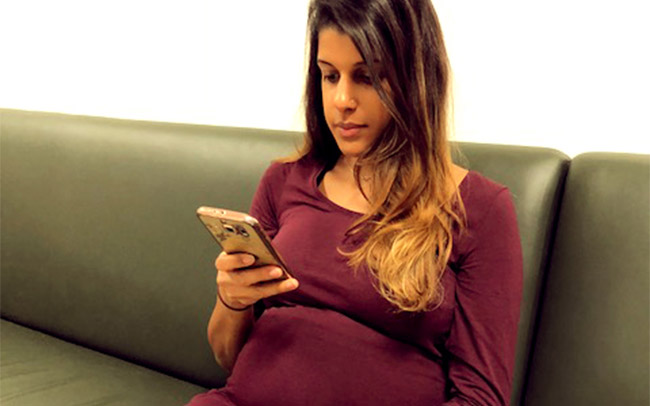 For any urgent concerns regarding your emotional and mental health at any stage in pregnancy, see advice on who to contact for support:
 Finding out you are having more than one baby can be exciting and special, but also sometimes overwhelming.
All multiple pregnancies have a higher risk of complications, and therefore you will have extra appointments and scans to make sure you and your babies are well.
If your babies share a placenta, it will be recommended that you have scans every two weeks, and if they each have their own placenta scans will be every four weeks.
You are likely to have your babies earlier than 40 weeks. Many twins are born vaginally although it may be recommended that they are born by caesarean section.
You will have plenty of support from your maternity team throughout pregnancy, birth and beyond.
Finding out you are having more than one baby can be exciting and special, but also sometimes overwhelming.
All multiple pregnancies have a higher risk of complications, and therefore you will have extra appointments and scans to make sure you and your babies are well.
If your babies share a placenta, it will be recommended that you have scans every two weeks, and if they each have their own placenta scans will be every four weeks.
You are likely to have your babies earlier than 40 weeks. Many twins are born vaginally although it may be recommended that they are born by caesarean section.
You will have plenty of support from your maternity team throughout pregnancy, birth and beyond.
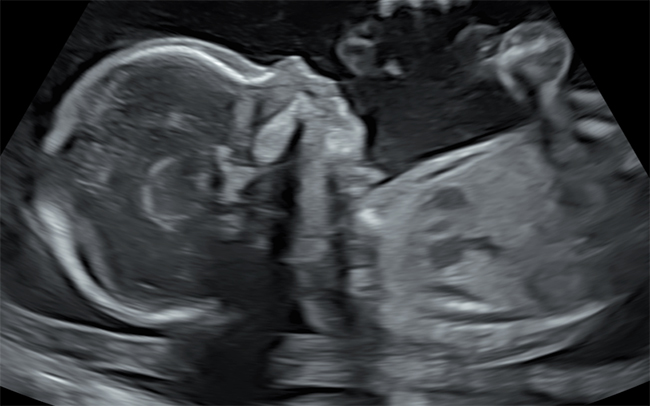 It’s important to remember that scans are another kind of test to confirm the health of your baby.
Ultrasound is a medical examination. Sonographers need to be able to concentrate and as such it is not recommended that young children attend.
You will normally be offered two scans in pregnancy. The first is known as the dating scan at around 12 weeks of pregnancy and the second (sometimes called the anomaly scan) is performed at around 20 weeks gestation. This second scan will look in detail at your baby’s bones, heart, brain, spine, face, kidneys and stomach.
It is important to remember that the scan cannot find everything that could be of concern about your baby. The quality of the images depends on several factors, including body mass index and fibroids.
If you wish to know the sex of your baby, you can ask the sonographer, although it isn’t always possible to see clearly.
All pregnant women in the UK are offered antenatal screening tests. A screening test in pregnancy cannot give you a yes/no answer as to whether your baby has a condition. It can only tell you what the chances are of your baby being affected. Screening tests in pregnancy include blood tests and ultrasound scans (ultrasound scans can suggest there might be a condition (as in screening for Down’s syndrome) or confirm there is a condition (as in diagnosing spina bifida)).
It’s important to remember that scans are another kind of test to confirm the health of your baby.
Ultrasound is a medical examination. Sonographers need to be able to concentrate and as such it is not recommended that young children attend.
You will normally be offered two scans in pregnancy. The first is known as the dating scan at around 12 weeks of pregnancy and the second (sometimes called the anomaly scan) is performed at around 20 weeks gestation. This second scan will look in detail at your baby’s bones, heart, brain, spine, face, kidneys and stomach.
It is important to remember that the scan cannot find everything that could be of concern about your baby. The quality of the images depends on several factors, including body mass index and fibroids.
If you wish to know the sex of your baby, you can ask the sonographer, although it isn’t always possible to see clearly.
All pregnant women in the UK are offered antenatal screening tests. A screening test in pregnancy cannot give you a yes/no answer as to whether your baby has a condition. It can only tell you what the chances are of your baby being affected. Screening tests in pregnancy include blood tests and ultrasound scans (ultrasound scans can suggest there might be a condition (as in screening for Down’s syndrome) or confirm there is a condition (as in diagnosing spina bifida)).
 A screening test can find out if you, or your baby, have a high or low chance of having a health problem.
Inside the cells of our bodies there are tiny structures called chromosomes. These chromosomes carry the genes that determine how we develop. You will be offered a screening test to see how likely it is that your baby will have a abnormality in their chromosomes (Down’s, Edward’s or Patau’s syndrome).
This test can be performed between 11 and 20 weeks and involves you having an ultrasound scan and a blood test. These tests are time critical, so it is very important that you attend for your scheduled appointment. If you are unable to attend contact the ultrasound department to rearrange as soon as possible. There are several different testing options available, so it is worth researching this early on.
You will be contacted by the maternity unit if the results come back as high risk and you will be offered further testing. You do not have to have any testing if you don’t want to.
A screening test can find out if you, or your baby, have a high or low chance of having a health problem.
Inside the cells of our bodies there are tiny structures called chromosomes. These chromosomes carry the genes that determine how we develop. You will be offered a screening test to see how likely it is that your baby will have a abnormality in their chromosomes (Down’s, Edward’s or Patau’s syndrome).
This test can be performed between 11 and 20 weeks and involves you having an ultrasound scan and a blood test. These tests are time critical, so it is very important that you attend for your scheduled appointment. If you are unable to attend contact the ultrasound department to rearrange as soon as possible. There are several different testing options available, so it is worth researching this early on.
You will be contacted by the maternity unit if the results come back as high risk and you will be offered further testing. You do not have to have any testing if you don’t want to.
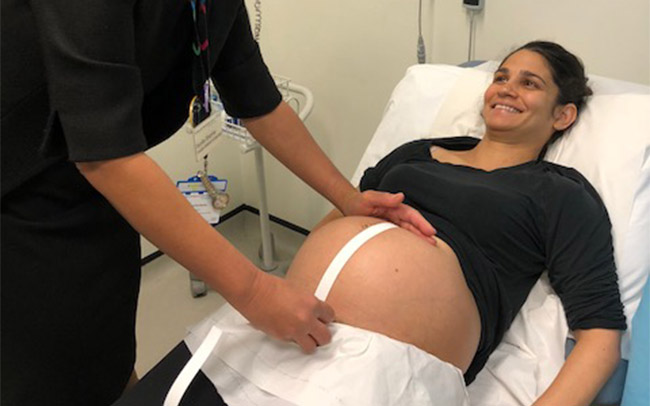 Once referred to a hospital, you can expect to see a midwife between 8 to 10 weeks of pregnancy.
If your pregnancy is straightforward, these are the appointments you should expect to have. Certain medical or pregnancy needs may result in you needing more appointments than this.
Appointments will normally be with a midwife, GP or obstetrician. The appointments at 25, 31 and 40 weeks are extra appointments for women having their first baby.
At every appointment your midwife will ask you about how you are feeling, and give you the opportunity to ask any questions or raise any concerns you might have.
You can bring your partner, friend or family member to your antenatal appointments. However, the midwife may request to see you alone for at least one appointment during your pregnancy.
Once referred to a hospital, you can expect to see a midwife between 8 to 10 weeks of pregnancy.
If your pregnancy is straightforward, these are the appointments you should expect to have. Certain medical or pregnancy needs may result in you needing more appointments than this.
Appointments will normally be with a midwife, GP or obstetrician. The appointments at 25, 31 and 40 weeks are extra appointments for women having their first baby.
At every appointment your midwife will ask you about how you are feeling, and give you the opportunity to ask any questions or raise any concerns you might have.
You can bring your partner, friend or family member to your antenatal appointments. However, the midwife may request to see you alone for at least one appointment during your pregnancy.