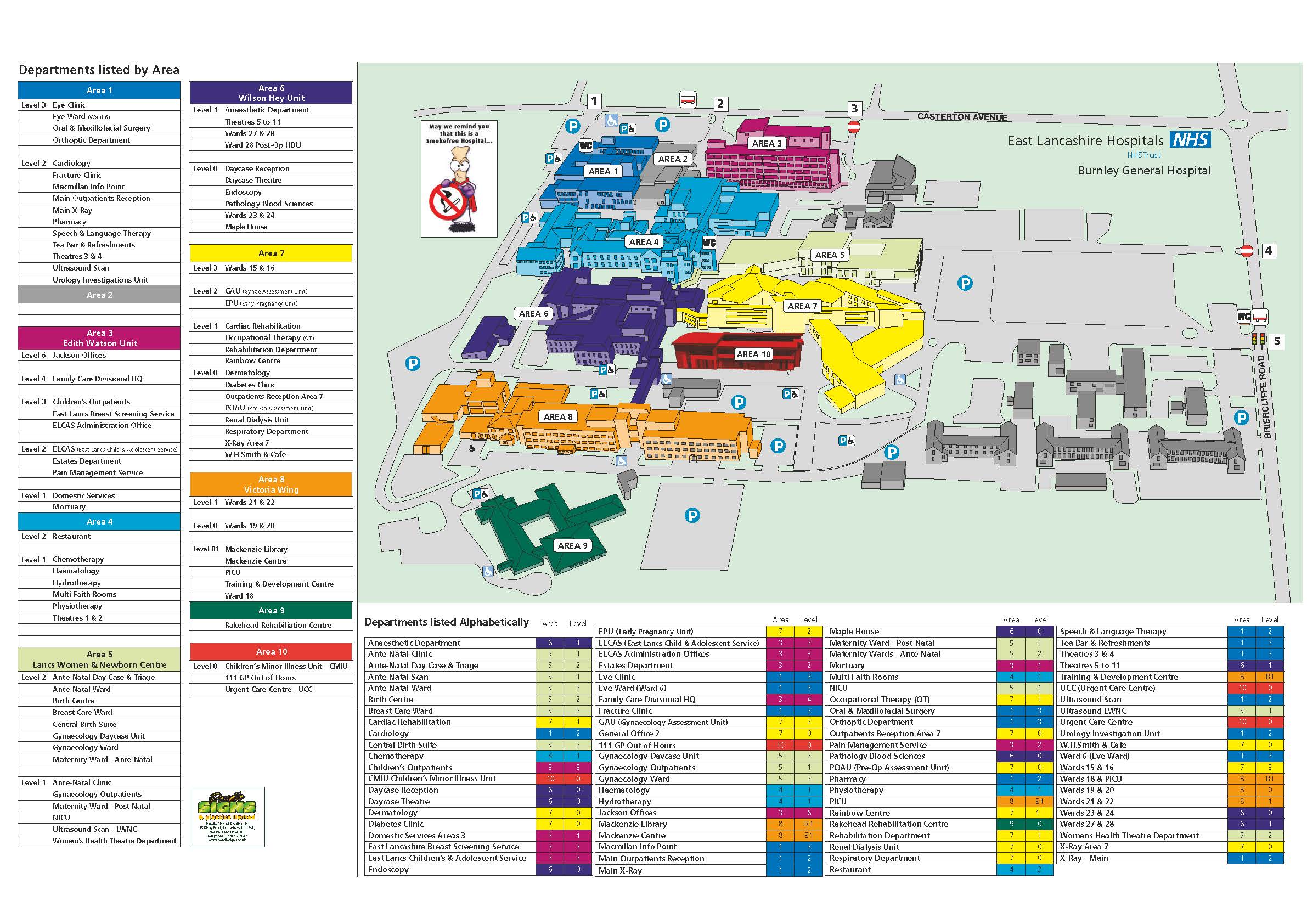
Hospital: Lancashire Women & Newborn Centre

Lancashire Women & Newborn Centre

Address

Burnley General Teaching Hospital

Casterton Avenue

Burnley

BB10 2PQ

Lancashire Women and Newborn Centre (LWNC) opened its doors in November 2010 as a brand new purpose built facility on the Burnley General Hospital Site.

The Centre delivers a range of services for women and babies coordinated by the Family Care Division of East Lancashire Hospitals Trust.

This state-of-the-art building includes East Lancashire's centralised consultant-led maternity unit, as well as a Level 3 Neonatal Intensive Care Unit, a midwife-led birth centre.

All our facilities are purpose-built, clean and modern with birthing pools available in all the birth centres and on the birth suite.

Over 6,500 women choose to have their babies at ELHT every year.

We were the first Trust in the world to be awarded the UNICEF Baby Friendly Initiative Gold Standard accreditation in 2017. This means we consistently demonstrate best practice standards around infant feeding and relationship building within maternity services.

We are one of a small number of maternity services nationally that is able to offer a full range of choice of place of birth, including:

Our specialist services include

What we offer:

  • Antenatal clinics
  • Ultrasound scan facilities
  • Specialist medical antenatal clinics (for women with medical conditions such as Diabetes)
  • Specialist multiple pregnancy (twins & triplets) clinic
  • Fetal wellbeing clinic
  • Specialist rainbow clinic
  • Antenatal day assessment unit
  • Maternity triage
  • Central Birth Suite

Central Birth Suite details

  • 19 birth rooms
  • 2 close observation beds which are used if 'mum' requires further monitoring after the baby is born
  • 2 birth pools with the option of mobile fetal monitoring
  • Level 3 Neonatology provision
  • A suite is available to provide a sensitive and sympathetic environment in which privacy and dignity is respected so that bereaved families can spend time with their baby
  • 38 bedded postnatal ward comprises three zones – A, B and C. The ward is equipped to also provide additional care to transitional care babies who have specific needs.
  • Antenatal and Postnatal Community Midwifery Services
  • Remifentanil PCA offered as an alternative to epidural in labour
  • Tours of the facilities at Lancashire Women and Newborn Centre (suspended due to COVID-19)
Virtual tour of facilities

Screening tests for you and your baby

Please read the Screening tests for you and your baby information before your midwife booking appointment to find about the screening tests offered during and after pregnancy. This information is also available in other language and easy guides .

Transport

Lancashire and South Cumbria COVID-19 Advice

Lancashire and South Cumbria COVID-19 Advice

Follow these links for information specific women feeding babies in Lancashire and South Cumbria. Additional local Coronavirus support: Your local NHS Trust Coronavirus guidance:

Coronavirus breastfeeding local information

Coronavirus breastfeeding local information

Amid the current pandemic of widespread infection and difficulties in purchasing formula milks, breastfeeding has never been more important for the health and wellbeing of our babies and their mothers. Current understanding is that COVID-19 cannot be passed to your baby via breastmilk. Infection could be spread to the baby in the same way as to anyone in close contact with you. However, the benefits of breastfeeding outweigh any potential risks of transmission of the virus through breastmilk or by being in close contact with your child. Therefore guidance is that breastfeeding babies should stay with their mothers and continue to be breastfed. Practise excellent hand hygiene: washing thoroughly with soap for a minimum of 20 seconds after touching face or surfaces and before handling your baby. If you are symptomatic, then you can consider wearing a mask when handling and feeding baby. We know that breastmilk is likely to be part of baby’s best defence against the virus if they do contract it; and we know that there are currently shortages of alternative milks for baby, so we hope that this information sheet on breastfeeding support will be useful.

Lancashire and South Cumbria local support with breastfeeding during COVID-19

If you are considering beginning breastfeeding for the first time, aiming to increase breastmilk supply because of formula shortages, or having breastfeeding complications that you’d like some support with, then we’ve put together some information about how to access support. Face to face breastfeeding peer support groups have been suspended to protect all. Visits from your midwifery and health visiting service will continue to some degree, but may be not be undertaken face to face or be reduced going forward. However, there are many ways to access support and information from a trained peer supporter or lactation consultants within our area and nationwide, during classic ‘working hours’ and also round the clock, which may be of use. These services are available by telephone, via social media groups and in some cases via WhatsApp video call or similar. NB. THESE ARRANGEMENTS COULD CHANGE DAILY ACCORDING TO STAFF AVAILABILITY but we will update the information regularly. We have agreed care pathways across Lancashire and South Cumbria so that if you require more specialist support, those delivering the below services can refer you onto it.

Families and Babies Lancashire (covering North, Central, East and West Lancashire)

Staffed by peer supporters. Tel: 01254 722929 (9.30am – 2.30pm, 7 days a week) FAB Lancs Breastfeeding Support

Blackpool and Fylde Coast Breastfeeding Support

Staffed by peer supporters and lactation consultants. Fylde Coast Breastfeeding Support

South Cumbria Breastfeeding Support

Staffed by peer supporter/lactation consultant. ann@cumbriabreastfeeding.org.uk South Cumbria Breastfeeding Support SCBS In it Together (new group)

Barnoldswick, Burnley and Colne BFFs

Staffed by peer supporters. Barnoldswick Group Burnley Group Colne Group

Blackburn with Darwen

Staffed by infant feeding support workers and volunteer peers supporters. Tel: 01282 803266 (Voicemail facility – please leave name, contact number and support question and we will respond with two working days.)

Blackburn with Darwen’s Breast Intentions

Staffed by volunteer peer supporters. Breast intentions (BwD infant feeding support)

East Lancs NCT Feeding Support

Staffed by peer supporters. branch.eastlancashire@NCT.org.uk Burnley Bumps and Babies

National support

National Breastfeeding Helpline

Tel: 0300 100 0212 (9.30am – 9.30pm, 7 days a week) National Breastfeeding Helpline

The Breastfeeding Network Drugs in Breastmilk

A service for information on medications or medical conditions and breastfeeding – factsheets written by pharmacist Dr Wendy Jones (MBE). Breastfeeding network drugs fact sheets

La Leche League Helpline

Tel: 0345 120 2918 La Leche League Helpline

NCT Helpline

Tel: 0300 330 0700

Lactation Consultants of Great Britain

An interactive map enables you to find expert and experienced International Board Certified Lactation Consultant (IBCLC) support. Many of our colleagues are using videocalls, email and phone support as a priority during the present COVID-19 situation. (NB Private IBCLC support may incur a fee.) Find an IBCLC

Online support

Breastfeeding Twins and Triplets UK

Breastfeeding Twins and Triplets UK

Breastfeeding With CMPA and Other Food Allergies

Breastfeeding With CMPA and Other Food Allergies Support Group UK

Breastfeeding Yummy Mummies

Evidence based information and support, administration by a team of qualified breastfeeding peer supporters, health visitors, midwives and IBCLC. Breastfeeding Yummy Mummies

Support in other languages

Breastfeeding support in other languages

Information sources for health professionals

UK Drugs in Lactation Advisory Service (UKDILAS)

Information around medications whilst breastfeeding

Coronavirus formula feeding local information

Coronavirus formula feeding local information

Amid the current pandemic, if you are currently having trouble obtaining you baby’s usual formula milk, here is some useful information to support decision making during this emergency. This is not advisory but informational during these unprecedented times. 1. To reduce the risk to baby, those who are currently being partially breastfed can be put to the breast more often and those who have been recently been, but are no longer being, breastfed can be put back to the breast in most cases. Please see below for details of how to access peer and specialist support to do so. 2. If you are struggling to afford formula milk because of an unexpected cash flow problem or higher prices of infant formula, you should firstly contact your Health Visitor: food banks don’t typically stock and supply formula milk due to regulations, but may be able to help via your Health Visitor in exceptional circumstances such as these. 3. If local shops and supermarkets do not have stock of formula, ask your pharmacy to order it in for you – be aware that this may take up to 2 days to arrive so plan ahead where possible. Formula may be more expensive when bought this way. 4. Try to connect with your local community – use local online parenting support groups or your neighbourhood’s online COVID-19 support group to ask if members of your community could share any spare unopened tins of appropriate formula with you (see point 5) until you can obtain some and replace it for them. 5. If you are finding it problematic to source your baby’s usual milk in your local pharmacies and shops, it may help to know: a) Formula fed babies up to 12 months can be fed on First Stage infant milk – therefore if your baby is under 12 months of age and is currently on second stage formula, but First Stage formula only is available, you can use this instead. b) “All infant formula on the UK market must meet compositional regulations, so all products are perfectly ok to feed a baby. More expensive brands still have to meet the same compositional standards as cheaper brands.” (First Steps Nutrition). If your regular brand of formula is sold out but other brands (including supermarket own brands) are available, it’s okay to buy another brand. There is no evidence that switching brands is harmful to babies, however if your baby has reacted negatively to a specific brand previously, try a different one. For any baby under 6 months, First Stage formula of a different brand is safer than stage 2 or 3 of their normal brand. c) There is no evidence to support the use of Comfort, Anti-Colic or Hungry Baby versions of formulas: these are classified as “foods for special medical purposes” and are not regulated in the same way as regular infant formula. If you are used to feeding your baby one of these formulas but cannot source it, First Stage formula milk should be suitable to use in an emergency. These milks should never be chosen for a baby that is already having First Stage formula as they could make your baby unwell if not used appropriately. Please speak to your Health Visitor if you have concerns about this. d) In order to have sufficient nutrition and reduce risk to the baby, formula-fed babies under 12 months of age should continue to have formula milk as their main drink and not be given cows’ milk or plant based milks as their main drink. Cows’ milk and calcium enriched plant based milks can however be used to make foods such as porridge and mashed potato once weaning onto solid foods begins at around 6 months of age. e) Growing Up milks are unsuitable for babies under 12 months and unnecessary for those over 12 months of age. If your baby is over 12 months of age, they should now be transitioned to cows’ milk or a calcium-fortified alternative where there is cows’ milk protein allergy. f) Condensed milk and evaporated milk are not suitable alternatives to formula milk. g) Do not resort to preparing home-made formulations based on recipes on social media – these may be dangerous for your baby and fail to meet their nutritional requirements. h) Further evidence-based information on infant milks: First Steps Nutrition. 6. Typical serving sizes suggested on the back of formula tins are often too large. Make up the amount of feed in response to the amount that your baby typically takes, rather than following guidance on the tin – for example, if you find that there is milk left over at the end of each feed, try making smaller amounts and feeding your baby more often. Remember to pace-feed. You can do this by sitting your baby upright during a feed and holding the bottle at a horizontal angle so the milk only comes out when your baby actively sucks. When baby looks sleepy, stop sucking or moves their head away, then they are saying that they have had enough milk. 7. Even when you are worried about getting a supply of formula milk, to keep your baby safe it is still important to make up feeds following the guidelines. a) Guidelines for the safe preparation of and storage of infant formula milk: Unicef Baby Friendly Guide to Bottle Feeding b) It is critical that the ratio of formula powder to water is made up according to the guidelines on the tin to ensure the correct and safe amount of nutrients. It is really important to not over dilute formula (e.g. making it with more water per number of scoops of powder) or to concentrate formula (e.g. make it with less water per number of scoops) both of which are harmful to baby. c) Re-heating or re-using partially consumed formula is dangerous due to the increased risk of bacterial infections. If a bottle of formula has been drunk from, the milk must be discarded within two hours. 8. Donor breast milk is sometimes be used in a crisis as stated by the World Health Organisation. Peer to peer milk sharing is not without risks. Most importantly, if you do manage to find baby milk in the supermarket, please stick to a limit of two tins per baby. Think about how it feels worrying about feeding your own baby, and know that others will also experience this fear if they arrive to empty shelves. All of our local infant feeding support services are able to support you – they are for all mothers and parents feeding infants with either breastmilk or formula milk.

Lancashire and South Cumbria local support

If you are considering beginning breastfeeding for the first time, aiming to increase breastmilk supply because of formula shortages, or having breastfeeding complications that you’d like some support with, then we’ve put together some information about how to access support. Face to face breastfeeding peer support groups have been suspended to protect all. Visits from your midwifery and health visiting service will continue to some degree, but may be not be undertaken face to face or be reduced going forward. However, there are many ways to access support and information from a trained peer supporter or lactation consultants within our area and nationwide, during classic ‘working hours’ and also round the clock, which may be of use. These services are available by telephone, via social media groups and in some cases via WhatsApp video call or similar. NB. THESE ARRANGEMENTS COULD CHANGE DAILY ACCORDING TO STAFF AVAILABILITY but we will update the information regularly. We have agreed care pathways across Lancashire and South Cumbria so that if you require more specialist support, those delivering the below services can refer you onto it.

Families and Babies Lancashire (covering North, Central, East and West Lancashire)

Staffed by peer supporters. Tel: 01254 722929 (9.30am – 2.30pm, 7 days a week) FAB Lancs Breastfeeding Support

Blackpool and Fylde Coast Breastfeeding Support

Staffed by peer supporters and lactation consultants. Fylde Coast Breastfeeding Support

South Cumbria Breastfeeding Support

Staffed by peer supporter/lactation consultant. ann@cumbriabreastfeeding.org.uk South Cumbria Breastfeeding Support SCBS In it Together (new group)

Barnoldswick, Burnley and Colne BFFs

Staffed by peer supporters. Barnoldswick Group Burnley Group Colne Group

Blackburn with Darwen

Staffed by infant feeding support workers and volunteer peers supporters. Tel: 01282 803266 (Voicemail facility – please leave name, contact number and support question and we will respond with two working days.)

Blackburn with Darwen’s Breast Intentions

Staffed by volunteer peer supporters. Breast intentions (BwD infant feeding support)

East Lancs NCT Feeding Support

Staffed by peer supporters. branch.eastlancashire@NCT.org.uk Burnley Bumps and Babies

National support

National Breastfeeding Helpline

Tel: 0300 100 0212 (9.30am – 9.30pm, 7 days a week) National Breastfeeding Helpline

The Breastfeeding Network Drugs in Breastmilk

A service for information on medications or medical conditions and breastfeeding – factsheets written by pharmacist Dr Wendy Jones (MBE). Breastfeeding network drugs fact sheets

La Leche League Helpline

Tel: 0345 120 2918 La Leche League Helpline

NCT Helpline

Tel: 0300 330 0700

Lactation Consultants of Great Britain

An interactive map enables you to find expert and experienced International Board Certified Lactation Consultant (IBCLC) support. Many of our colleagues are using videocalls, email and phone support as a priority during the present COVID-19 situation. (NB Private IBCLC support may incur a fee.) Find an IBCLC

Online support

Breastfeeding Twins and Triplets UK

Breastfeeding Twins and Triplets UK

Breastfeeding With CMPA and Other Food Allergies

Breastfeeding With CMPA and Other Food Allergies Support Group UK

Breastfeeding Yummy Mummies

Evidence based information and support, administration by a team of qualified breastfeeding peer supporters, health visitors, midwives and IBCLC. Breastfeeding Yummy Mummies

Support in other languages

Breastfeeding support in other languages

Information sources for health professionals

UK Drugs in Lactation Advisory Service (UKDILAS)

Information around medications whilst breastfeeding

Hospital: Chorley Birth Centre

Chorley Birth Centre

Address

Chorley and South Ribble Hospital

Preston Road

Chorley PR7 1PP

“At Lancashire Teaching Hospitals we provide a welcoming, relaxed, and supportive maternity service for you and your family. You will be cared for by our highly skilled maternity team which includes obstetricians, midwives, maternity support workers, and health care assistants.

"We are committed to supporting you before, during and after the birth of your baby, and will work with you to ensure you are involved in all aspects of your care so you can make informed choices and feel safe, confident and empowered. Our maternity team provide high quality, evidence-based care, thereby supporting your choices, with competence and confidence to achieve positive outcomes."

There are birth centres at both Chorley & District Hospital and Royal Preston Hospital.

Expert midwifery care is provided in calm and relaxed surroundings that have been specifically designed and equipped to support the normal physiological birth process – an ideal birthing environment for women who experience a problem-free pregnancy.

Chorley Birth Centre offers three, recently updated, en-suite birthing rooms, two of which have birthing pools. A sitting room and family room provide additional facilities for new mothers and their birth partners.

New mothers and their partners are able to stay for up to 24 hours after the birth in both birth centres.

You should be aware that there are no doctors based in the birth centres and should you require, or request, medical input (including epidural analgesia) at any stage of your labour, birth or postnatal stay you would be transferred to the obstetric unit in the Sharoe Green Unit. From Chorley Birth Centre any transfer would be by ambulance and take approximately 40 minutes.

More information about the birth centres can be obtained from your midwife who will be able to give you advice and support as you make decisions about how and where you would like your baby to be born.

Our specialist services include

  • Continuity of care midwifery teams
  • Home from home environment
  • One-to-one case-loading teams
  • Homebirth service

Transport

Directions by car

The Birth Centre is situated on our Chorley and South Ribble Hospital site.

Take junction 8 of the M61.

Follow signs towards Chorley (A6) along short dual carriageway.

At the first roundabout, turn left, continuing to head towards Chorley (A6).

At the second roundabout, take second turning onto Euxton Lane (B5252).

The main hospital entrance is 200 yards on the left at the traffic lights.

Bus services

Buses operate from the main bus station.

Bus numbers: 7, 19, 22, 23 and 123 all go to the hospital.

Taxi services

Local taxis offer a service to and from the hospitals. Free phones are available at both hospital sites to make taxi bookings.

Hospital: South Lakes Birth Centre

South Lakes Birth Centre

Address

Furness General Hospital

Dalton Lane

Barrow-in-Furness

Cumbria LA14 4LF

"At Morecambe Bay Hospitals we will provide compassionate, high quality, evidence-based and safe maternity services that meet the needs and wishes of all women and their families."

Our values:

  • We will treat all woman and their families with kindness, dignity and compassion
  • We will care for all woman and their families as we would wish to be cared for ourselves
  • We will always do the right thing.

We will achieve this:

  • By working as a multi-professional team with our communities to improve your, physical, mental, social and emotional health at all stages in their life.

Through this we will be able to support women and families to enter pregnancy and childbirth in the best of health and wellbeing.

University Hospitals of Morecambe Bay has three maternity units. Royal Lancaster Infirmary and the South Lakes Birth Centre, both providing Consultant and midwifery-led care, and Helme Chase, our midwife-led unit.

Our specialist services include

If you choose to have your baby at any of our units you may need to transfer between the units for care during pregnancy or labour, as they operate as one hospital trust (University Hospitals of Morecambe Bay). For more information about this, discuss with your midwife at your first booking appointment.

At Morecambe Bay Hospitals we will provide, compassionate, high quality, evidence-based and safe maternity services that meet the needs and wishes of all women and their families.

Services include:

  • Safe and Active birth midwife
  • Diabetes service
  • smoking cessation service
  • perinatal mental health service
  • teenage pregnancy specialist midwife
  • homebirth service
  • Neonatal intensive care and Special Care Baby Units (Consultant sites)

Transport

Parking

There is a disabled access outside the Special Care Baby Unit and pay and display car parking spaces in the large car park close to the Unit.