Each maternity unit in South East London offers all three locations for birth: home, midwife led unit or obstetric led unit, however, if you are planning a homebirth, you will need to be booked with your closest maternity unit.
Greenwich Domestic Violence and Abuse Service (GDVA) , provides practical advice, emotional support and signposting to support survivors and professionals across London. The advice line can also help you to access refuge accommodation or other specialist domestic violence services.
The Gaia Centre, run by Refuge offers independent, confidential support and advice to any Lambeth resident experiencing domestic abuse (as well as other forms of gender based violence). It is a single point of access for women, girls and men experiencing violence and abuse. This means that anybody experiencing any form of gender-based violence in Lambeth can find all the tailored support they need under one roof.
They also have an early intervention service which supports young people aged 11 up.
There is also access to a number of refuges which offer safe accommodation to those fleeing domestic abuse, although you may need to access refuges in another area of the country for safety reasons.
Refuges can be accessed via the Gaia Centre or by calling the National Domestic Abuse 24/7 freephone helpline:
For more information and a list of support services you can also view Violence Against Women and Girls (VAWG) which lists all of Lambeth’s support services.
Lewisham
Athena, Lewisham
The Athena service, run by Refuge provides confidential, non-judgmental support to those living in the London Borough of Lewisham who are experiencing gender-based violence. It opened its doors in April 2015 and provides outreach programmes, independent advocacy, group support, refuge accommodation and a specialist service for young women.
Who can use Athena:
• Women and girls aged over 13
• Men aged 16 or older
• Transgender and identifies as male, female, as another gender, or is questioning gender identity
If you are experiencing any kind of domestic or sexual abuse, the Southwark Advocacy and Support Services (SASS) can help. They support people aged 16 and above, who live in Southwark, at risk of domestic or sexual abuse whether they choose to report the abuse to the police or not.
SASS offer support whether you choose to report the abuse to police or not
. They also provide a service for men, women and young people using violence within an intimate or family relationship.
Many of the NHS Trusts and hospitals in South East London have their own charities. These charities raise money via fundraising activities for patients and staff and by coordinating and receiving charitable donations. Money raised is re-invested into service improvement projects. To find out more about your local NHS hospital charity, follow the links below.
You can decide where in South East London you want to receive your maternity care during pregnancy, birth and beyond.
Your maternity choices in South East London
Women and their families are encouraged to provide feedback either via the individual Trust websites (listed below), Our Healthier South East London or SEL Clinical Commissioning Group. This information collected will be used to ensure continued improvement of services:
The South East London Local Maternity System meet quarterly and work together to drive maternity improvements across the sector. Workstream meetings are held bi-monthly to focus on individual areas of work and the Maternity Delivery Group monthly to monitor progress.
Visit the Our Healthier South East London website to find out more about how you can get involved in health improvement projects in your area.
This app, originally developed by North West London Local Maternity System, has been adapted for use in South East London by South East London Local Maternity System.
If you live outside of South East London, you can still use this app's content and develop your personal care plans. To find your nearest unit follow this link:
In South East London, Oxleas NHS Foundation Trust (Oxleas) and the South London and Maudsley (SLaM) provide mental health services.
Oxleas NHS Foundation Trust has a new trust wide perinatal mental health service. The service is based at Queen Mary’s Hospital and consists of a multidisciplinary team of professionals including team manager, consultant perinatal psychiatrists, specialist perinatal nurses, clinical psychologists, nursery nurses, OT, Social worker and administrators.
These are divided into three small teams for Bromley, Bexley and Greenwich. Each team works closely with midwives, obstetricians, health visiting, other secondary mental health services and children’s social services. There are close links with GPs, IAPT and third sector organisations (including Cocoon, MIND, and Mums Aid).
The service offers specialist assessment, care and treatment for women who are planning a pregnancy, pregnant or up to 12 months postnatal. The team offers a range of specialist interventions, including advice to help women weigh up the risks and benefits of using psychiatric medication in pregnancy and breastfeeding.
SLAM – The Perinatal Mental Health Team is a multidisciplinary mental health service for pregnant and postnatal women with severe and complex mental illness.
The team aims to prevent, detect and treat perinatal mental health problems. We work to improve the experience of pregnancy and the postpartum period for women and their families, as well as early life experiences for babies.
Women at risk of relapse in pregnancy and following delivery are assessed early in pregnancy to allow them time to consider the treatment and care options available. The Perinatal Mental Health Team works collaboratively with women, their families and other professionals to plan care during pregnancy and the early postpartum period.
The Perinatal Mental Health Teams work jointly with adult mental health services already providing care for a woman when she becomes pregnant. We work in partnership with maternity services, children and families’ social services, primary care and other Trust mental health services.
Our service consists of psychiatrists, psychologists, perinatal nurses, perinatal nursery nurses, midwives, occupational therapists and administrators.
The Maternity and Neonatal Safety Improvement Programme (MatNeoSIP)
This project aims to improve the safety and outcomes of maternal and neonatal care by reducing variation in practice and providing a high quality healthcare experience for all women, babies and their families across England.
PReCePT (Prevention of Cerebral Palsy in Preterm Labour)
The PReCePT programme aims to reduce the incidence of cerebral palsy in babies born prematurely by giving women a medication called magnesium sulphate during labour. This programme is being rolled out across South East London and other activities include improving care, strengthening staff capability across maternal and neonatal units and supporting mothers to become more involved with their care to improve quality of life of preterm babies and their families.
You can opt to have your baby in a private hospital. Find more information about private maternity units and locate specific private maternity units here.
Private maternity service within an NHS facility
Private rooms
All hospitals in South East London have the option of private rooms for after the birth, and these vary in cost. You can ask your midwife or doctor about this.
For research projects in South East London Local Maternity System, please see the related link section below.
‘Our ambition is for mothers, babies and their families in South East London to experience joined up, high quality care during and after their pregnancy. They should be supported to make choices that are right for them, and where risks or complications mean additional intervention is required the care is safe with a good outcome.
We will work in partnership to ensure women and their families are involved in making decisions about their care, are prepared for a healthy and confident pregnancy, received holistic great quality care and feel supported before and after birth.’
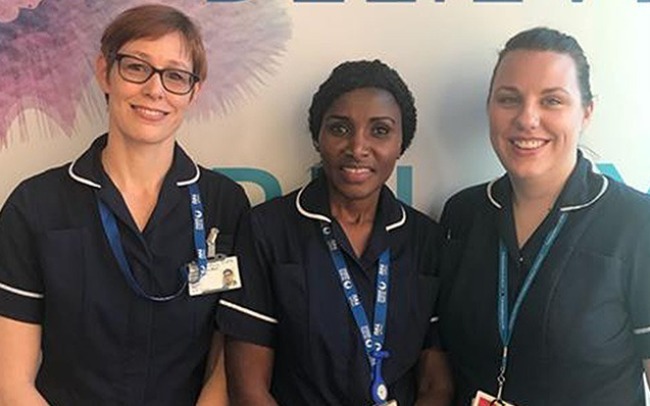
You will meet several midwives throughout your pregnancy, birth and beyond. Midwives are the main caregiver when your pregnancy and birth are straight forward. In South East London we are working hard to ensure each woman has a named midwife who is responsible for coordinating your maternity care.
Obstetrician
These are doctors who specialise in caring for women during pregnancy, birth and in the period immediately after birth (whilst in the maternity unit). You may see an obstetrician during pregnancy if you have any issues which require review or more specialised management and they will be involved if you have a caesarean or assisted birth.
Paediatrician/Neonatalogist(baby doctor)
Paediatricians or neonatologists are doctors specialising in the care of newborn babies and children. They will be involved in your care if early (premature) delivery is anticipated or if there are likely to be concerns about the health of your baby during or after the birth.
Sonographer
These are professionals who undertake your ultrasound scans. They are specially trained to undertake scans during pregnancy.
Maternity support worker
You may meet maternity support workers during pregnancy, birth or beyond. They support the maternity team and provide some of your care throughout the journey.
Student midwife
Maternity units in South East London work closely with local universities to support midwives and doctors in training. These students will work alongside their midwife ‘mentor’ and will ask for your consent before providing you with any care.
Health Visitor
Health visitors work in teams. They work closely with the other professionals listed above, including GPs and organisations that support families where you live. Most families in England will be offered several review contacts and additional support depending on the individual needs of your family.The health promoting visit at 28 weeks of pregnancy, is the first time that the health visitor meets parents. A health needs assessment will be agreed, covering physical, mental and emotional health and wellbeing. The health visitor will also discuss a number of issues, including transition to parenthood, how to enhance the parent-child bonding experience and how parents can help their baby's early development.
Other staff members
You may meet other members of staff or medical students, depending on your pregnancy needs and where you choose to have your care.
{‘hospitals’:[{‘slug’:’hospital-kings-college-hospital-denmark-hill’,’name’:”King`s College Hospital – Denmark Hill”,’imageurl’:’http://mumandbabyv4.imagineear.com/wp-content/uploads/2020/12/KCH-Denmark-Hill-photo-0201201_114421.jpg’,’id’:0,’coordinate’: {‘latitude’:51.468287416946644,’longitude’:-0.09381188641564206}},{‘slug’:’hospital-princess-royal-university-hospital’,’name’:”Princess Royal University Hospital”,’imageurl’:’http://mumandbabyv4.imagineear.com/wp-content/uploads/2020/12/PRUH-photo.jpg’,’id’:1,’coordinate’: {‘latitude’:51.366366131186496,’longitude’:0.05815886906422223}},{‘slug’:’hospital-queen-elizabeth-hospital’,’name’:”Queen Elizabeth Hospital”,’imageurl’:’http://mumandbabyv4.imagineear.com/wp-content/uploads/2020/12/Queen-Elizabeth-Hospital-entrance.jpg’,’id’:2,’coordinate’: {‘latitude’:51.47813376187213,’longitude’:0.05003882971952644}},{‘slug’:’hospital-st-thomass-hospital’,’name’:”St Thomas` Hospital”,’imageurl’:’http://mumandbabyv4.imagineear.com/wp-content/uploads/2020/12/2619_St-Thomas_-Hospital-exterior.jpg’,’id’:3,’coordinate’: {‘latitude’:51.49925406424385,’longitude’:-0.11882152908032684}},{‘slug’:’hospital-university-hospital-lewisham’,’name’:”University Hospital Lewisham”,’imageurl’:’http://mumandbabyv4.imagineear.com/wp-content/uploads/2020/12/University-Hospital-Lewisham.jpg’,’id’:4,’coordinate’: {‘latitude’:51.453249679783816,’longitude’:-0.017099732781495094}}]}