What happens if my baby is born prematurely?

What happens if my baby is born prematurely?
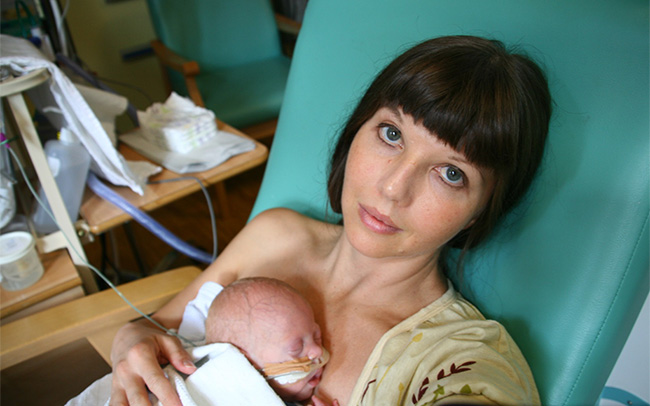
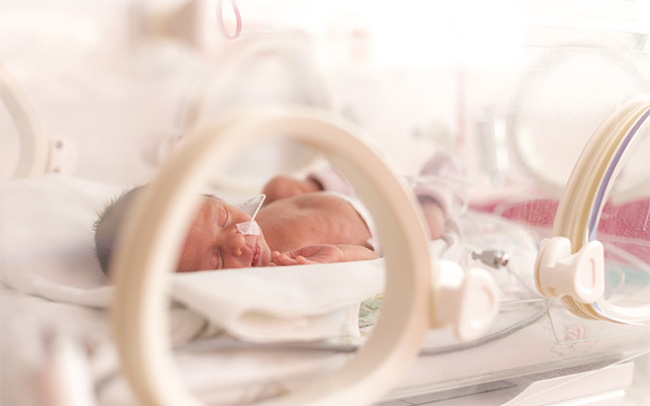
Babies born before 34 weeks are likely to need extra help with breathing, feeding and keeping warm, and would therefore be transferred to the neonatal unit for care. This care is provided by a highly skilled neonatal team. Your baby may need to be in an incubator, however once they are stable you should be able to hold them and have skin-to-skin contact. Colostrum and breast milk are very beneficial for babies that are born early. If your baby is too small to feed itself you can express your breast milk and this will be given to your baby via a tube. The neonatal team will support you with expressing your milk. Once your baby/babies can breathe on their own, feed via the breast or bottle and have gained weight, you will be able to take them home. This can often take several weeks if your baby was born extremely preterm. You will be supported by the maternity team whilst you and your baby remain in the maternity unit. There are also many organisations that provide support to parents of preterm babies.
Reducing cerebral palsy in pre-term babies
What happens if I go into preterm labour?

What happens if I go into preterm labour?

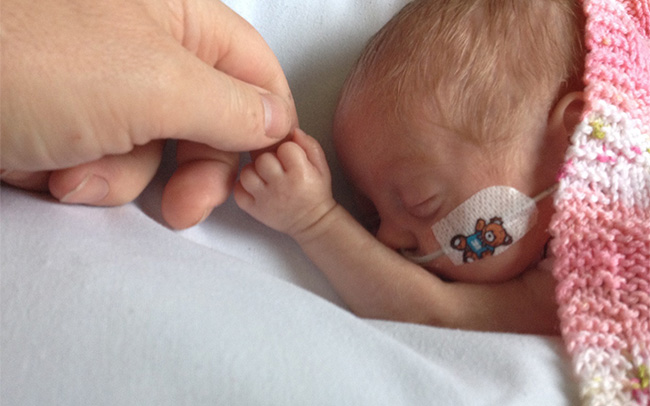
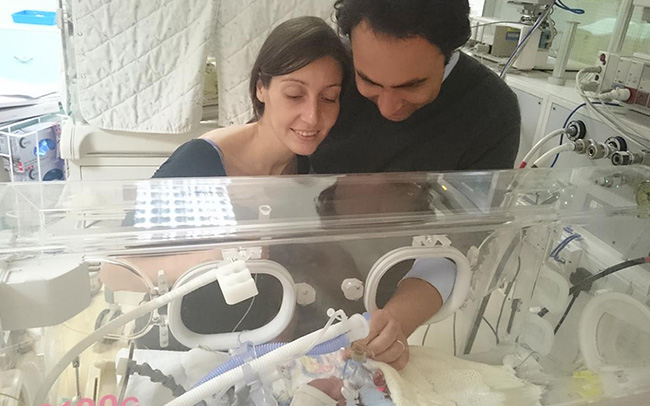
Depending on how many weeks pregnant you are, you may be offered medicines to try and slow down or stop your labour, antibiotics to reduce the risk of developing an infection, and steroid injections that are given to you, to help your baby’s lungs develop and prepare for life outside the womb should they be born early. If your baby is extremely preterm (less than 28 weeks) you may need to be transferred to a maternity unit with a neonatal intensive care unit.
Portal: What happens if I go into preterm labour?

Causes of preterm birth

Causes of preterm birth

A baby may be born prematurely as a result of preterm labour or because an earlier birth is recommended, due to complications that may have arisen during the pregnancy (affecting the mother or the baby). In many cases, it is not clear why labour starts early, however factors known to increase the risk of preterm labour include the following;
  • premature rupture of the membranes (your waters breaking early)
  • some infections, such as chorioamnionitis, which effects the membranes and amniotic fluid protecting the baby
  • multiple pregnancy (the average twin pregnancy is 37 weeks in length, and the average triplet pregnancy is 33 weeks in length)
  • previous preterm delivery
  • having a placenta that is ‘low-lying’ (meaning it either partially or completely covers the cervix) or having a placental abruption (meaning the placenta starts to separate from the wall of the womb)
  • maternal medical conditions, including diabetes or conditions linked to inflammation (eg. Crohn’s disease)
  • being a smoker, drinking alcohol or using illegal substances
  • low Body Mass Index (having a weight that is considered to be low for your height)
  • biopsies or LLETZ treatments to remove abnormal cervical cells
  • having a weak cervix that might open during pregnancy
  • polyhydramnios (excessive amniotic fluid)
  • intrahepatic cholestasis of pregnancy (a pregnancy condition affecting your liver)
  • abnormalities of the shape of the womb
Sometimes, you may develop a complication during your pregnancy and your healthcare professional may recommend preterm delivery. Examples of conditions that may require preterm delivery include:
  • moderate to severe pre-eclampsia (a pregnancy condition causing high blood pressure which can also affect some of your internal organs)
  • poorly controlled diabetes
  • intrauterine growth restriction (when your baby’s growth slows down or stops)
  • if your waters break early and you are developing an infection
  • other medical complications of pregnancy.
Women who are considered to be at risk of starting labour prematurely may be offered treatment to maintain the pregnancy for as long as is safely possible.

Preterm labour and birth

Preterm labour and birth

A baby that is born before 37 weeks gestation is considered to be ‘premature’ or ‘preterm’.  There are different categories of prematurity:
  • extremely preterm (less than 28 weeks)
  • very preterm (between 28 and 32 weeks)
  • moderate to late preterm (between 32 and 37 weeks).
In the UK, roughly one in every 13 babies will be born prematurely. Preterm birth carries risks because babies who are born too soon may not be fully developed, and need specialist help for life outside of the womb. Preterm babies are also at risk of longer term health problems.

Call your midwife or maternity unit if you are less than 37 weeks pregnant and you have:

  • regular period type pains or contractions
  • constant abdominal pain
  • a “show” – the mucus plug that sits inside the cervix during pregnancy. This can be clear or blood stained
  • fresh red bleeding from the vagina
  • a gush or trickle of fluid from your vagina – this could be your waters breaking
  • backache that is not usual for you, or pressure in the vagina or rectum.
You may find this range of videos about premature birth from Best Beginnings helpful: