If you have had a healthy pregnancy without complication and haven’t gone into labour by 41 weeks you will have a routine appointment with your midwife to discuss the next steps.
What happens at your 41 week appointment?
You will be offered a membrane sweep, which is an internal examination of the cervix. During this examination your midwife will insert the tip of her finger into your cervix and sweep around the bag of membranes that cover your baby’s head. This has been shown to release hormones that may encourage labour to start within 24 hours. Sometimes the cervix isn’t yet open, and a sweep isn’t possible. You may be invited to return for more sweeps.Your midwife will also offer you a date to have your labour induced. This is normally recommended by 41 weeks and three, four or five days (depending on your maternity units guidelines and availability). Some maternity units are able to offer complementary therapy to encourage labour to start naturally. Ask your midwife about this.
Around 15% of babies are born by emergency caesarean section, either during pregnancy or labour. The most common reason for this is a concern with the health of the baby, meaning that to continue in labour is not thought to be the safest option.Most women will have an epidural or spinal anaesthetic to ensure they do not feel the operation, however in some cases where the pain relief isn’t adequate, or there isn’t enough time to put the spinal in, a general anaesthetic might be advised.There are some associated risks with caesarean section delivery, for both you and your baby and your team will discuss these risks with you prior to the surgery.Recovery from emergency caesarean is the same as recovery from a planned caesarean.
In some cases your doctor may recommend assisting the birth of your baby by using either a ventouse or forceps. This may occur where the second stage of labour (the pushing stage) is longer than expected, where your baby’s head is not in the best position to come through the birth canal or if there are changes to his/her heartbeat meaning that birth needs to happen as soon as possible.A ventouse is a metal or plastic suction cup that is placed on your baby’s head. Forceps are curved metal tongs that are placed around your baby’s head. You will be offered pain relief for an assisted birth, with either local anaesthetic or an epidural. The birth will be managed by an obstetrician, your midwife will be present to help and support you. Your doctor will gently pull using the ventouse or forceps whilst you push during your contractions. Sometimes several pulls are needed, or if one method doesn’t work, the other may be tried. You are more likely to need an episiotomy, particularly if forceps are used. In rare circumstances, if neither ventouse or forceps successfully deliver your baby, a caesarean birth might be recommended.
An episiotomy is a cut that is made (with your consent) to the perineum (the area between your vagina and your rectum) to assist in the birth of your baby.
Your midwife or doctor may recommend this if:
your baby’s heartbeat suggests that he or she needs to be born as quickly as possible.
if you are having an assisted birth; or
if there is a high risk of a serious tear affecting your rectum. An episiotomy is repaired using dissolvable stitches and normally heals within a month of birth.
Oxytocin is the naturally occurring hormone that causes your womb to have contractions. If your contractions slow down, or are not effective in causing the cervix to dilate, it may be recommended that you have a synthetic oxytocin drip which is given in small amounts directly into a vein via a cannula. Oxytocin makes contractions stronger and more regular. If you have an oxytocin drip, close monitoring of you and your baby (using continuous electronic fetal monitoring, sometimes called cardiotocograph or CTG) is recommended.
Before, or during labour your waters will normally break at some point (although sometimes they don’t – and some babies are born in their amniotic sac).If your labour seems to have slowed down or there are concerns about your baby’s wellbeing, your midwife might recommend breaking your waters. This is done during a routine vaginal examination, it does not hurt your baby, and has been shown to sometimes reduce the length of labour.If you think your waters have broken it is important to call your maternity Triage/assessment unit straight away, particularly if you think you can see meconium, which is green or brown in colour. If you are less than 37 weeks pregnant this may be a sign of premature labour.
During labour, sometimes things can slow down or concerns can arise with your or your baby’s well-being. If this happens your midwives and/or doctors may recommend certain options to help you to give birth to your baby safely.
Your midwife/doctor will explain why induction has been recommended for you and your baby, including the risks and benefits of having it at the time advised, versus waiting. If you choose not to have the induction, or to postpone it, you may be offered additional monitoring to observe you and your baby’s wellbeing.
How long can induction take?
Induction can take anything from a few hours to a few days. Bring plenty of things to distract you, as there can be a lot of waiting whilst the medications start to work.
What if the induction does not work?
If the induction is unsuccessful your midwife and doctor will discuss your options with you. These options may include waiting, trying something else or a caesarean section.
Is induction painful?
Vaginal examinations may be uncomfortable but should not be painful. It is felt that induced labour (particularly with a oxytocin drip) can be more painful than natural labour. You can discuss your options for pain relief with your midwife at every stage of the induction process.
Around 30% of women are recommended an induction of labour for varying reasons.Your midwife or obstetrician will have a full discussion with you in the antenatal period routinely at your 36 or 40 week appointment regarding induction of labour and the benefits and risks of this, enabling you to make a fully informed decision. Methods used to induce labour vary depending on a range of factors. Your doctor and midwife will discuss the different methods with you and advise a method based on your personal circumstance.When you come into the maternity unit for your induction, a midwife will undertake a full assessment of you and your baby and this will include electronic fetal monitoring (CTG) of your baby’s heartbeat and to see if you are having any contractions. Then the midwife or doctor will assess your cervix by undertaking a vaginal examination. Following this examination options for induction will be discussed with you. Some women may need only one of the steps below and others will need all three to get them to established labour (four centimetres dilated with strong, regular contractions):
Step 1
Prostaglandin
Many women find that their cervix is not quite ‘ready’ for labour yet, and in this case your midwife will insert a gel or pessary containing a hormone known as prostaglandin during vaginal examination. The gel works over six hours, and you will be asked to stay in the maternity unit for this time. The pessary is released slowly over twenty four hours, and if you and your baby are responding well you may be able to go home during this time. Some women find that the gel or pessary is enough to start contractions and labour. Other women may not experience any changes. After the medication has had time to work, a midwife will assess the cervix again and see if it is possible to break the waters. Some women may be offered further doses of prostaglandins.
Step 1
Balloon catheter
Some Trusts offer the balloon catheter as the very first step in the induction process. If the prostaglandin pessary does not work or is not suitable for your circumstance, you may be offered a balloon catheter. This is a small balloon which is inserted in the cervix, putting pressure on it, causing your body to release its own natural labour hormones that may cause mild cramps and dilatation of the cervix. The balloon catheter works over 12 – 24 hours to stretch and soften the cervix in preparation for labour.
Step 2
Amniotomy
Some women (particularly those who have had a baby before) may be told that their cervix is thin and starting to open. In this case it will be recommended that your waters are broken artificially, this is called amniotomy. A midwife will insert a small sterile hook into the vagina to make a hole in the bag of waters that surrounds your baby. After the waters are broken, labour may start on its own. Amniotic fluid may continue to drain from the vagina for the duration of your labour.
Step 3
Oxytocin drip
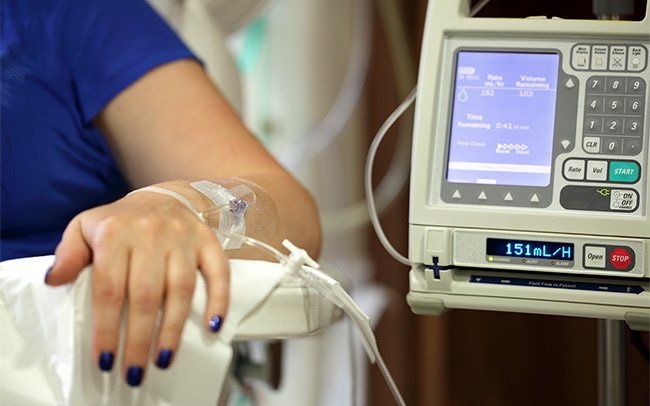
For those women whose contractions do not start after the waters are broken, a hormone called oxytocin will be recommended. Oxytocin is diluted and given in small amounts directly into a vein through a cannula inserted into your hand or arm. The oxytocin drip causes your womb to have contractions. The drip is usually given continuously until your baby is born. A midwife will be caring for you and monitoring you and your baby closely for the duration of labour.
Understanding induction of labour – a video developed by clinicians, women and a local hospital charity in North West London.
you are overdue or post-dates, meaning that your baby has not been born yet and you are at least 10-13 days past your due date. This is the most common reason for induction
your medical history suggests an earlier birth would be safer for you or your baby
there are concerns with the wellbeing of your baby, meaning that it would be safer for them to born sooner than to wait for labour to start naturally
your waters have broken and labour has not started naturally.

 If you have had a healthy pregnancy without complication and haven’t gone into labour by 41 weeks you will have a routine appointment with your midwife to discuss the next steps.