Reducing the risk of cot death (Sudden Infant Death Syndrome or SIDS)

Reducing the risk of cot death (Sudden Infant Death Syndrome or SIDS)
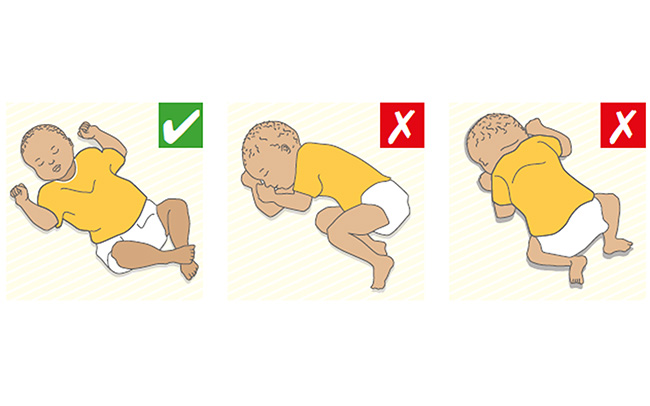
Sudden Infant Death Syndrome (SIDS) is the sudden and unexpected death of a baby where no cause is found. This is rare but it can still happen and there are steps you can take to reduce the risk of this occurring:
  • always place your baby on his/her back to sleep
  • babies should not be swaddled when sleeping
  • place your baby so his/her feet are right at the end of the cot/moses basket, rather than in the middle, to prevent them from sliding underneath covers
  • do not use cot bumpers or quilts, only use sheets and lightweight blankets
  • ensure room temperature is between 16-20°C, as overheating your baby can be dangerous
  • the safest place for your baby to sleep is in a cot or moses basket in the same room as you, for the first six months.
Safer sleep for babies


Sharing a bed with your baby

Sharing a bed with your baby

Some parents may choose to co-sleep/bed-share with their baby. It is important for you to know how to do this safely – and when it is not advised, as bed sharing is known to increase the risk of Sudden Infant Death Syndrome (SIDS), sometimes referred to as cot death. Never fall asleep with your baby on a sofa or armchair. Bed sharing is particularly dangerous if:
  • either you or your partner smokes
  • either you or your partner has drunk alcohol or taken drugs
  • you are extremely tired
  • your baby was born prematurely
  • your baby was born at a low weight (2.5kg or 5½lbs or less).
You can get further information from your midwife or health visitor and read the links below.

What is normal sleep?

What is normal sleep?

Your baby will have his/her own pattern of waking and sleeping, and it’s unlikely to be the same as other babies you know.   Please note that newborn babies do not need a routine.  However, over a course of several months you will have a routine established. Normal sleeping patterns from nought to three months:
  • most newborn babies are asleep more than they are awake
  • their total daily sleep varies, but can be from eight hours up to 16-18 hours
  • babies will wake during the night because they need to feed.

How to bottle feed your baby

How to bottle feed your baby

  • hold your baby close in a semi-upright position, in skin-to-skin contact if possible and maintain eye contact by turning baby inwards towards your body
  • rub the teat gently over the upper lip, this will encourage them to open their mouth and draw in the teat
  • hold the bottle horizontally with a slight upright tilt to prevent both air entering the teat and the milk flowing too fast
  • allow your baby to set the pace of the feeding, enabling your baby to pause frequently
  • towards the end of the feed remove the teat and wind (burp) your baby
  • if your baby shows continued feeding cues, offer the remaining milk
  • don’t try and force your baby to take more than they want
  • limit the number of people who feed your baby to yourself and one or two others – this helps with building a relationship and bonding with your baby
  • never leave your baby alone with a bottle.

Look out for signs of stress when bottle feeding:

  • pushing the bottle away
  • back arching
  • grimacing, frowning, or crying
  • gagging, spitting up.

Formula feeding advice

Formula feeding advice

Key facts about formula feeding:
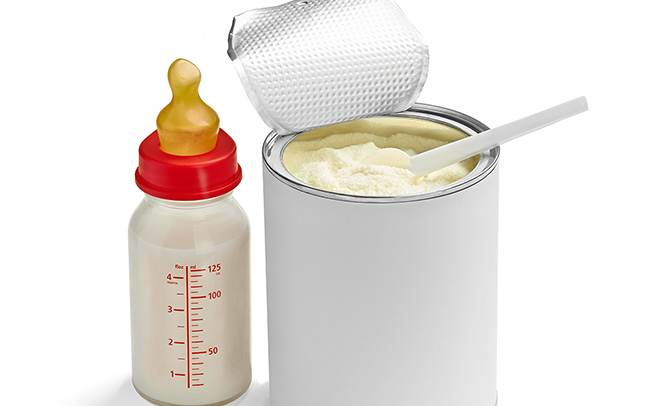
  • always use a first infant formula in the first year of your baby’s life
  • make up feeds one at a time as your baby needs them
  • never warm up formula in the microwave
  • the water needs to be above 70°C in order to kill any bacteria in the milk powder, as it is not sterile
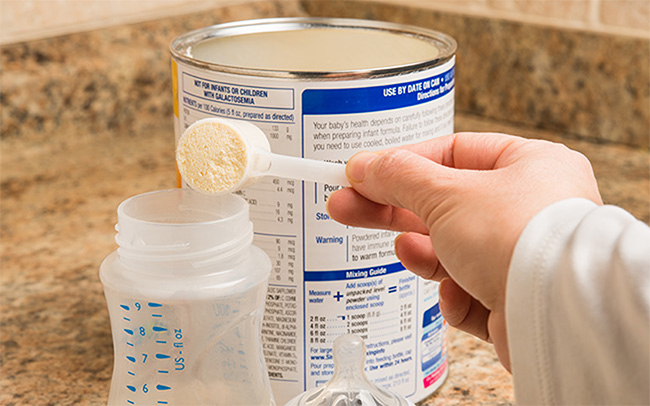
  • always put the water in the bottle first, then add the powder
  • only use the scoop enclosed in the packaging, as they can differ in size between brands
  • follow manufacturer’s specific instructions on how to prepare formula milk
  • ensure to measure a level scoop of formula as instructed on the packet
  • before giving to your baby, check the formula is cool by dripping a few drops on the back of your hand
  • throw away any unused formula when your baby has finished feeding.

Bottle feeding

Bottle feeding

Whether you have chosen to feed your baby expressed breast milk or formula milk via a bottle, these tips will help you keep your baby safe whilst building a close and loving relationship between you.

Preparing bottles

Bottles and teats need to be thoroughly cleaned and sterilised in order to kill any harmful bacteria. Follow the instructions on your chosen steriliser regarding this. Formula milk should be made up in line with the packet instructions, always read the label carefully.

Expressing milk

Expressing milk

Hand expressing can be useful:
  • To express colostrum or milk to give your baby, if they are unable to feed from the breast.
  • To relieve fullness or engorgement of the breast or blocked milk ducts.
  • To stimulate your breasts to produce more milk.
  • Some women find using a breast pump easier, some prefer hand expressing and some do both. Using a pump in the early days is not an effective way to collect small volumes of colostrum.

How to hand express

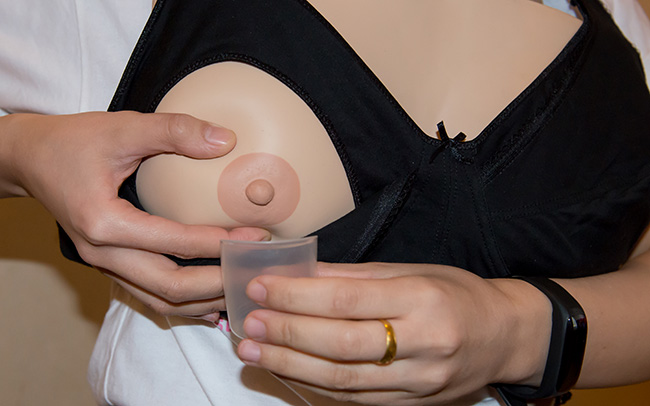
  1. Have a clean sterilised container to hand before you start.
  2. Cup your breast and place your thumb and finger about 2-3 cm from the base of the nipple.
  3. Using your thumb and the rest of your fingers in a C shape, gently squeeze this area – this shouldn’t hurt.
  4. Release the pressure and then repeat again and again, building up a rhythm. Avoid sliding your fingers over the skin. At first, only drops will appear, but just keep going as it will help build up your supply. With practice and a little more time, milk will flow freely.
  5. When the flow slows down, move your fingers round to try a different section of your breast and repeat. When this happens again swap to the other breast. Keep changing breasts until the milk is dripping very slowly or stops altogether.
  6. If the milk doesn’t flow, try a gentle breast massage, cuddle your baby or someone you love, smell your baby or loved one, or gaze into their eyes – this will help to release the hormone oxytocin (the “love hormone”) which releases the milk in your breasts.

Storage and use of expressed breast milk:

  • Expressed breastmilk can be kept for 4-6 hours at room temperature.
  • You can store expressed breast milk in a sterilised container in the fridge for up to five days, or in a freezer for up to six months.
  • Frozen milk is best defrosted slowly in the fridge. Expressed breast milk can be given straight from the fridge or warmed up by placing the bottle in a jug of warm water.
  • Once defrosted, use within 12 hours and do not refreeze. Dispose of any unused milk following a feed.
How to express breast milk

Signs of good feeding/Needing support

Signs of good feeding/Needing support

Use the following charts and related links to determine how well your baby is feeding. Many breastfeeding problems can be resolved with adjustments to positioning and attachment. If you have signs suggesting that you may need support it is essential to seek help straight away. Many sources of support are available 24 hours.

Help with feeding your baby

Help with feeding your baby

If you have any problems with feeding your baby (including painful nipples or breasts, your baby not feeding as well as before) ask for help as soon as possible. Your community midwife team works seven days a week, and you can request additional visits or telephone consultations if needed. Breastfeeding is the healthiest way to feed your baby. If you decided not to breastfeed or have stopped breastfeeding, it is possible to restart. This can be difficult because your milk supply will naturally reduce once you are not breastfeeding, but it can increase again to meet your baby’s needs. Look for skilled support to help you. If your midwives are no longer visiting you, ask for help from your Health Visitor, your Children’s Centre or try a local baby feeding support group (your midwife or Health Visitor can give you details). Alternatively, especially out of hours, you can call the following telephone helplines provided by trained volunteers (they can help with breastfeeding or bottlefeeding problems): The National Breastfeeding helpline: Tel: 0300 100 0212 (9.30am-9.30pm) The NCT Breastfeeding line: Tel: 0300 330 0771 (8.00am-midnight) La Leche breastfeeding helpline: Tel: 0345 120 2918 (8.00am-11pm)