Breasts and genitals

Breasts and genitals
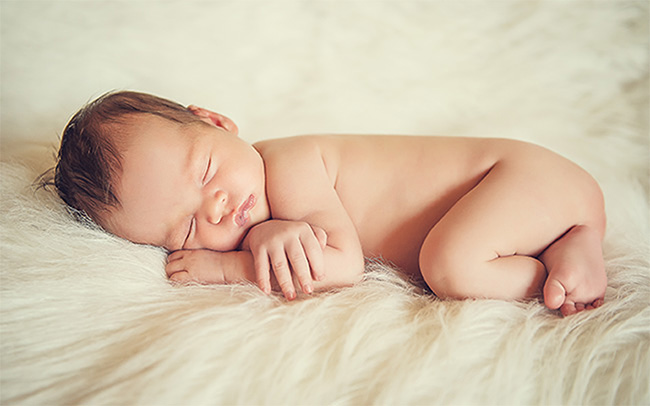
It is common for a newborn baby’s breasts to be a little swollen and they may ooze some milk, whether a boy or a girl. The genitals of newborn babies often appear rather swollen but will look in proportion with their bodies in a few weeks.   Girls sometimes have a cloudy discharge from their vagina and can have a small amount of bleeding known as a ‘pseudo period’ caused by the withdrawal of your hormones that she received via the womb. This is normal, however, if you are concerned speak to a midwife.
Bumps and bruises

Bumps and bruises

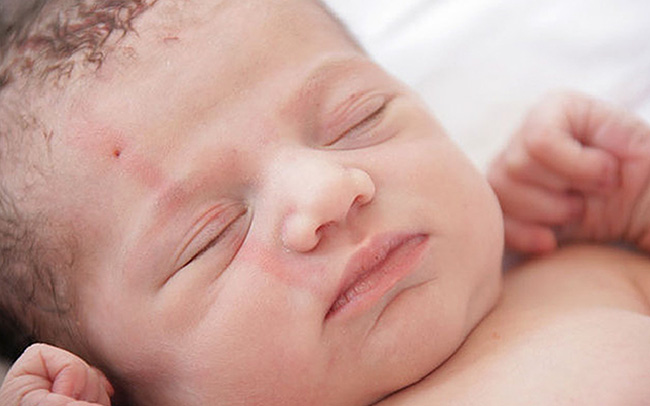
Newborn babies commonly have some swelling (caput) and/or bruises on their head. This can be the result of the squeezing and pushing during their birth and often this will soon disappear. Bumps and bruises are more likely to occur with an assisted  ventouse or forceps birth and may occur on one or both sides of the head.  At times, these may last for weeks but will resolve naturally, without a need for any treatment.

Eye care

Eye care

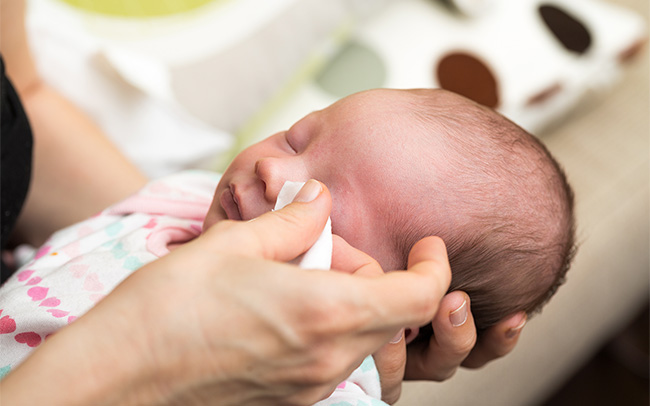
No special cleaning of your baby’s eyes is required unless your baby develops an infection. However, look out for any signs of eye stickiness, redness or discharge. These can occur for no apparent reason but may appear as a yellow discharge in one or both eyes. Should this happen, please inform your midwife or health visitor, who may take a swab from the eye(s) and/or arrange for your doctor to prescribe treatment.

Nappy content

Nappy content

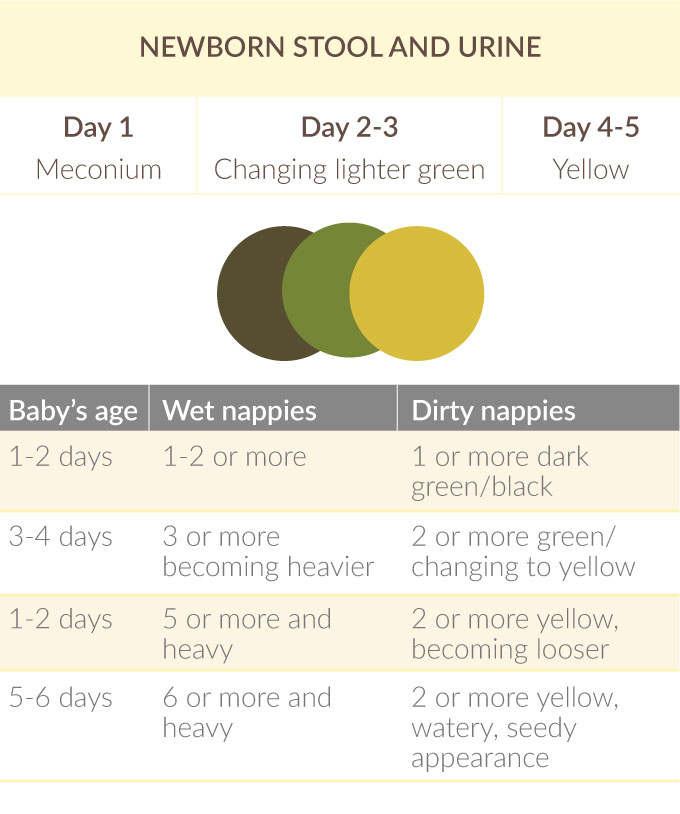
Newborn stools & urine:

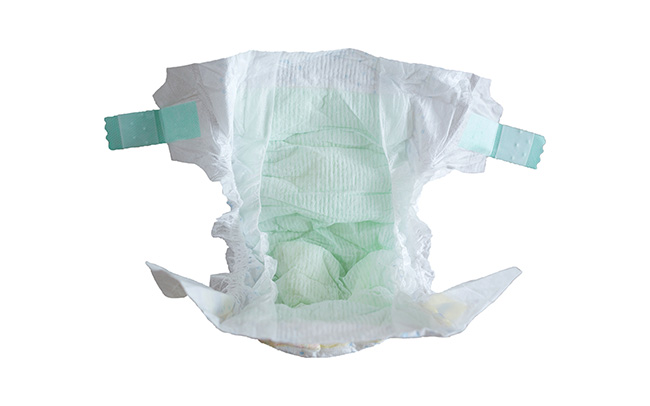
Your baby’s urine (wee) and stools (poo) can show if your baby is getting enough milk. The more milk your baby drinks, the more urine your baby will produce. If your baby is producing lots of clear urine, this is a sign that they have had enough milk. Urine output gradually increases up to day 6-7, when they should have at least six heavy wet nappies in 24 hours. As your baby drinks and digests milk in the first few days after birth, the dark, black sticky meconium changes to a mustard yellow coloured stool (poo). The quicker the stool changes to yellow, the more milk your baby must have drunk and digested. If the stool is still dark black on day 3, this suggests they may not be getting enough milk. Speak to your midwife immediately if your baby’s urine or stool is not increasing/changing according to the table above. Some babies will pass an orange/red substance (urates) in their urine. Speak to your midwife if you see this beyond the first two days. If you have had a baby girl, you may notice that she has a small ‘pseudo period’. The withdrawal of your hormones that she received via the womb can cause a small amount of vaginal bleeding. This is perfectly normal.

Knowing your baby is well

Knowing your baby is well

If you are concerned about your baby’s health at any time, please contact NHS 111 service for advice, call 999 or take your newborn to your local A&E or urgent care centre as soon as possible. Abnormal symptoms can be:
  • your baby is pale, floppy or unresponsive
  • your baby is grunting and/or breathing fast and the breathing appears laboured, with the chest sucked in or nostrils flaring
  • jaundice (yellow colour of skin or whites of eyes) in the first 24 hours after birth. See:
  • your baby’s jaundice appears to be worsening in combination with any of the following: severe lethargy, reluctance to feed, minimal wet/dry nappies or pale/white stools. See:
  • your baby is not feeding as well as before
  • your baby has a continued high pitched or weak cry which cannot be settled with normal measures such as feeding, cuddling, nappy change etc.
  • your baby feels hot or cold (if you have a thermometer your baby’s temperature should be between 36.5°C and 37.5°C). It is not usual for baby’s hands or feel cool to the touch.
  • your baby has a rash or blisters on the skin.
  • green-coloured vomit
Download The Lullaby Trust Baby check app to support you in identifying if your baby is unwell.

Bathing your baby and your baby’s skin

Bathing your baby and your baby’s skin

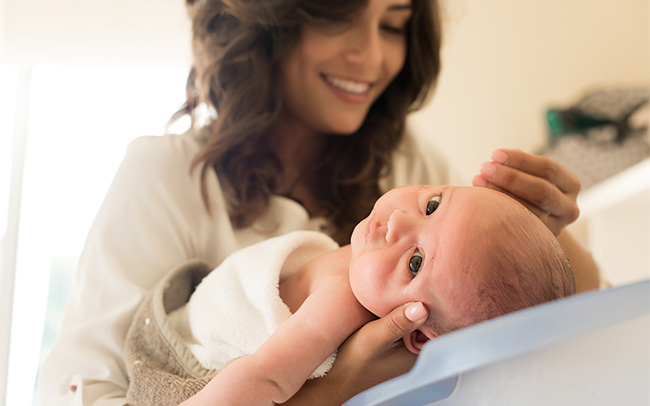
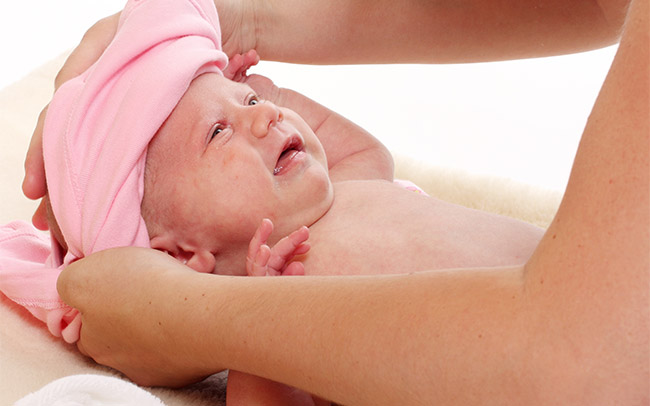
A newborn’s skin is delicate and sensitive, and the use of any creams, lotions or cleansers should be avoided for at least the first month. Babies may have dry skin after birth, and this is nothing to worry about. When bathing, it is best to use plain water and only a very mild and non-perfumed soap if required.
How should I bath my baby?

Caring for the umbilical cord

Caring for the umbilical cord

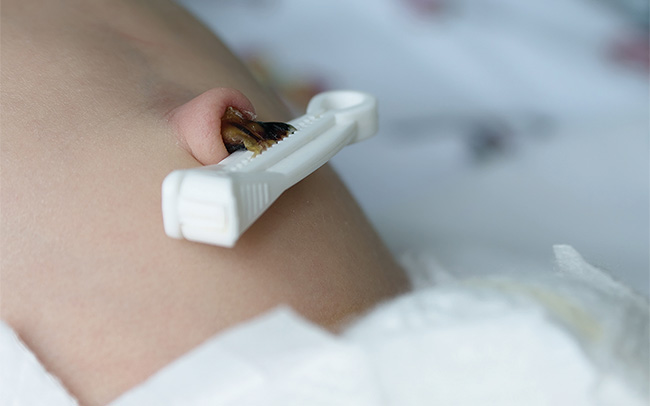
After your baby is born, their umbilical cord will be secured with a plastic clip. The cord will then take between three to ten days to dry out and drop off. It is normal for the cord to be slightly sticky and smelly as it dries out. The area can be cleaned with plain water if necessary and dried carefully with a clean soft cloth or muslin.  If you notice any bleeding from the cord or redness on your baby’s abdomen, tell your midwife, health visitor or GP.

Dressing your baby

Dressing your baby

The following tips will help you plan how to keep your baby’s temperature within the normal range:

Room temperature

Try to keep the room temperature between 16-20°C.

Deciding the right amount of clothing and bedding

Indoors:

Daytime – your baby should wear the same amount of clothes as you wear plus an extra layer. Night time – your baby should wear a vest and babygro in bed plus be covered with the same number of bedding  layers as parents. If your baby seems restless and fussy and the skin appears flushed and feels hot, remove a piece of clothing or blanket. It is normal for babies to have cool hands and feet. They should feel warm on their chest (same as you) but if their hands or feet feel cold and look blue and blotchy, add mittens, socks/booties, a hat and a cardigan or blanket. Babies do not need to wear hats indoor. It can lead to them overheating.

Outdoors:

Babies should wear hats outdoors  in summer and winter to protect against all weather conditions. Babies under six months’ old must be kept out of direct sunlight, especially around midday. During daytime, cover exposed parts of the baby’s skin with sun creams, using the baby specific sun creams. Don’t forget to reapply it regularly throughout the day. In a heated car or on public transport, babies who are overdressed can easily become too hot. Remember to remove a layer/s of clothing or any covering blanket.

When at home

Don’t forget to take off baby’s outdoor clothes and hat when you get inside. Don’t keep the cot, buggy or car seat next to a radiator, heater or fire, in direct sunshine or near an open window.

Soothing a crying baby

Soothing a crying baby

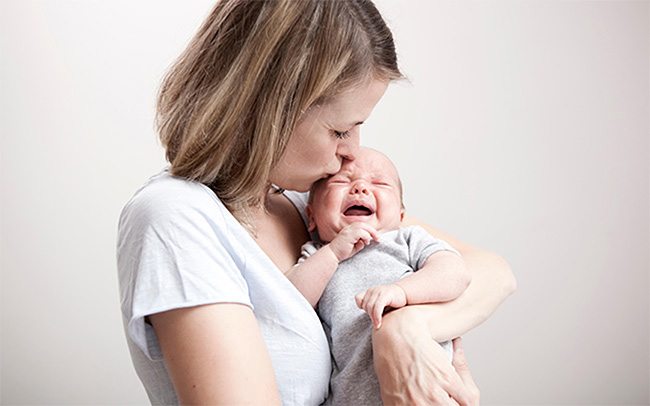
All babies cry, and some cry a lot. Crying is your baby’s way of telling you they need comfort and care. Sometimes it’s easy to work out what they want, and sometimes it isn’t, so be kind to yourself. Do remember that when you become anxious, crying babies tend to sense this and may become more distressed. So in the initial weeks, work your way systematically through the different reasons why a baby may cry.

Tips to comfort a crying baby

Try some of these ways to comfort your crying baby:
  • place your baby skin-to-skin
  • check if your baby is hungry. If so, feed your baby
  • check your baby’s nappy. If dirty, change the nappy
  • hold your baby close to you. Move about gently, sway and dance, talk to your baby or sing
  • try stroking your baby’s back firmly and rhythmically, holding her/him against you 
  • find something for your baby to listen to or look at – like music on the radio, a CD, a rattle or a mobile above the cot
  • rock your baby gently backwards and forwards in the pram
  • try a warm bath. When testing for bath temperature, a warm bath will feel comfortable against your elbow skin. Warm baths calm some babies instantly, but make others cry even more.