Mouth (oral) thrush

Mouth (oral) thrush

Oral thrush is a common fungal infection in the mouth. It can be easily and quickly treated if it doesn’t clear up on its own.

How do I know if my baby has thrush?

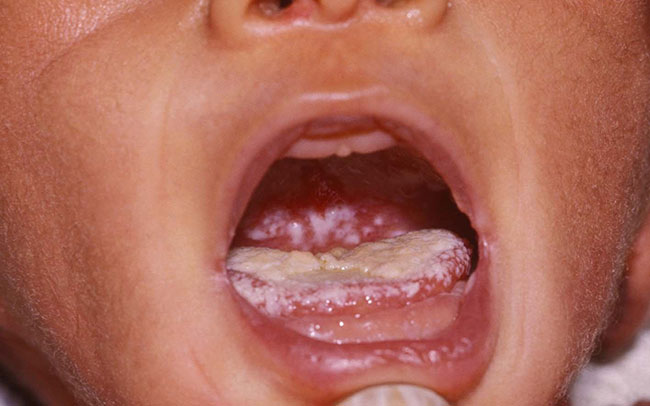
  • Look out for white spots or patches on your baby’s cheeks, gums and palate. These patches can look like milk spots, but if you rub them there will be a raw area underneath.
  • Your baby may fuss when breastfeeding or might even refuse your breast or bottle.
  • Sometimes babies get nappy rash when they have oral thrush. It might look red or bright pink with small raised spots and you might find standard nappy rash creams aren’t effective in clearing the rash.
  • If you are breastfeeding you may notice that you have thrush on your nipples, making them painful, red and cracked.

What treatment will we receive?

Your GP or Health Visitor may prescribe an antifungal treatment. The type of treatment will depend on the age of your baby. A course of treatment usually takes 7 days. If there is no improvement after a week, ask your GP for further advice.
  • If you have thrush on your breasts, the GP will prescribe medicine for you too.

How can I prevent thrush?

  • Oral thrush will usually become less of a problem as your baby’s immune system develops.
  • Take extra care when sterilising bottles, soothers and other feeding equipment.
  • If you still have thrush, wash your breasts after feeding. Use plain water, pat dry and applied any prescribed treatment to avoid further contamination.
  • To prevent re-infection, make sure you keep separate towels for your hands before and after feeding, and before and after changing your baby’s nappy.

Getting practical help after birth

Getting practical help after birth

Additional resources are available to you to help you with finances, housing, infant feeding, peer support, social activities in your area, and many more. As this information is gathered for your area, this app page will include local links to help you find these resources.
Portal: Getting Practical Help in After your baby is born

What if my baby needs additional support?

What if my baby needs additional support?

Transitional care is when you and your baby stay together in hospital with support from the hospital staff. It means that your baby is well enough to stay with you either on the post natal ward or a room near the neonatal unit. You will be in hospital with your baby. Common reasons for a baby requiring transitional care include:
  • babies born early between 33 and 35 weeks
  • babies with jaundice requiring treatment
  • babies needing antibiotic treatment
  • babies requiring extra support with their feeding.
Your baby will be reviewed regularly by one of the neonatal doctors or nurses whilst they are in transitional care and the treatment plan will be discussed with you. Some babies may need more care than can be provided on the post natal ward or in transitional care and they are admitted to the neonatal unit. The main reasons for a baby to be admitted are that they are born prematurely, have a low birth weight or have a specific medical condition which needs treatment in hospital. When your baby is admitted one of the neonatal team will be able to update you on your baby’s condition and progress. You will be able to visit your baby at any time on the neonatal unit. Babies admitted to a neonatal unit receive care according to what they need. If your baby is born extremely preterm or are very sick after delivery they may need an increased level of care. If they need specialist care your baby may need to be moved (often called transferred) to another hospital. The doctors from the neonatal unit will discuss this with you.

Baby’s oral health

Baby’s oral health

Brushing

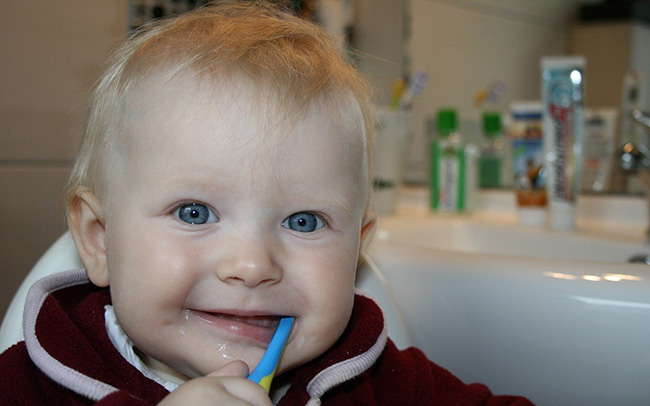
  • Start brushing your baby’s teeth as soon as they come through the gum – usually at around 6 months old.
  • Use a baby toothbrush and a tiny smear of family or baby toothpaste, containing at least 1000ppm fluoride.
  • Don’t rinse your baby’s mouth after brushing.
  • Brush your baby’s teeth twice a day – once at night and once during the day, usually in the morning.
NHS Oral health guidance for babies
Brushing for 0 to 3 year olds with Dr Ranj

Sugar

  • Too much sugar can harm your baby’s new teeth.
  • Only give water or milk to your baby to drink. Fresh fruit and vegetables provide your baby with all the sugar they need.
  • Try not to give any food containing extra sugar – if you do, makde sure it is with a meal and not as a snack.
  • Fresh fruit and vegetables are tooth-friendly snacks just like cheese, rice cakes, breadsticks and plain yogurt.

Dentist

National guidance advises that all babies should visit the dentist for the first time by their first birthday.

Baby car seats and slings

Baby car seats and slings

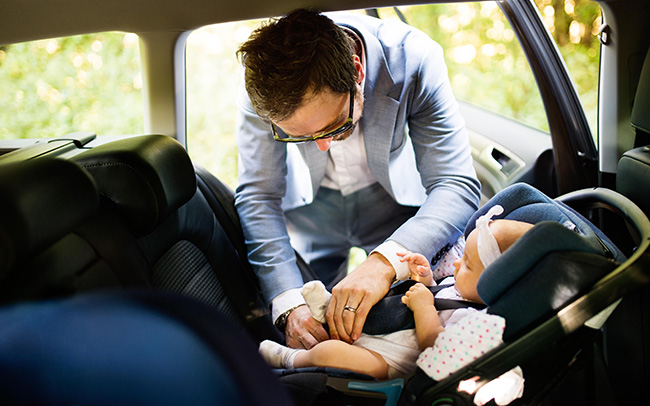
When travelling by car it is essential to place your baby in a suitable baby car seat. You will need the car seat to take your newborn baby home from hospital, so it is worth taking the time to find a suitable car seat during pregnancy. Many parents also choose to carry their baby in a sling. The guidance in the link below shows how to do this safely.

Keeping your baby warm after birth

Keeping your baby warm after birth

Why is this important? If a baby becomes cold after the birth, the baby can be at risk of developing hypothermia. Hypothermia is a condition where the body temperature drops to a dangerously low level. In a newborn, this occurs when the baby’s temperature drops below 36.5°C. A baby with hypothermia may have problems breathing regularly and maintaining their blood sugar and may result in admission to the Neonatal Intensive Care Unit (NICU) for treatment. Leaving the warmt of the womb at birth, the wet newborn baby comes into a much colder environment and immediately starts to lose heat. Most of this heat loss occurs within the first few minutes after birth and if not kept warm in the first 10-20 minutes, the baby may lose enough heat for their body temperature to fall to a very low level. Some babies are more at risk of geting cold, these include:
  • Preterm babies born at less than 37 weeks’ gestation
  • Babies with low birth weight
  • Babies of mothers who are diabetic
  • Babies who need to be resuscitated at birth
  • Babies where the mother has an infection in labour
However, all babies are susceptible to hypothermia in the first few hours after the birth, so it is important to take simple measures afer the birth to keep your baby warm.

What will my materniy team do to ensure that my baby is keep warm?

  • Ensure the temperature of the birth room is at least 24°C
  • Check the air conditioning and fans in the birth room are turned off or facing away from the baby
  • Keep windows closed
  • Turn on heaters if appropriate
  • After the birth, your baby will be dried immediately and a hat will be put on your baby’s head.
If there are additiona risk factors, then a red hat will be put on your baby’s head to alert all team members that your baby is more at risk of getting cold. Once your baby is dried, the wet towel used to dry your baby will be removed and replaced with a blanket. During skin to skin contact, your baby will also be covered with blankets. You will be encouraged to feed your baby or express your breast milk and give your baby within an hour of birth. Bathing your baby should wait until the baby has adjusted to the environment and maintains its temperature. The baby’s temperature will be checked shortly after the birth to ensure that this is within the normal range.

    How can you help your baby?

    As parents, you can help the maternity team in ensuring that your baby is kept warm. There are many things you can do to help:
    • Tell a midwife or support worker if the birth room is not warm enough. This is very important just before and in the horus after the birth.
    • This may mean reminding a midwife or support worker to close windows and turn off the air conditioning/fans, or turn up the heaters.
    • Ensure that during skin-to-skin contact your baby is covered with blankets.
    • Ensure tht your baby keeps the hat on for the first 12 horus; as much as 25% of heat loss will be from the baby’s head if it is not covered.
    • If a red hat has been put on your baby’s head then please keep this in place for 12 hours. You can usually then remove the hat and replace it with one of your own baby hats.
    • When dressing your baby for the time, warm the clothes and blankets beforehand. You can do this by placing the baby clothes against your skin or under your clothes.
    • When in the cot, ensure that your baby is adequately covered. Babies usually need one or two more layers of clothing or bedding than adults.
    • Tell a midwife or support worker if you think your baby’s breathing is no normal.
    • If you notice that your baby is breathing very fast for a continuous period (more than 60 breaths per minute), or seems to be struggling to breathe, with nostrils flaring or making noises wih each breath, then please tell a member of your maternity team.
    • Babies use up energy to keep themselves warm, there you will be encouraged to feed your baby regularly and will lbe supported in doing so. Some babies may need more frequent feeds. However, a well baby will need to have feeds at least every three hours for the first few days of life.

    How long should I take these measures for?

    If kept warm, once the baby is around six hours old, then will then usually be able to maintain their temperature at a normal level. The observation of your baby’s temperature will continue for at least 12 hours. Some babies that are unwell or vulnerable at the time of birth (for example, a baby with a low birth weight) may need support to keep warm for a longer period of time. If you have any questions, please ask one of the midwives or support workers.

Handling your newborn baby

Handling your newborn baby

Babies like being held securely and gently. They need to have their heads and necks carefully supported as their neck muscles are not strong enough to hold their head up yet Babies find touch soothing; an upset baby can be comforted by a gentle cuddle or rhythmic rocking in a parent’s arms. It may often help to wrap your baby up securely in a blanket, although it’s very important not to allow your baby to become overheated. Very occasionally babies are accidentally dropped, particularly when a parent falls asleep holding a baby; or when holding the baby they slip, trip or fall. Here are some things you can do to stop your baby being injured:
  • Return your baby to its cot when settled
  • Change your baby’s nappy on a changing mat on the floor
  • Do not leave your baby unattended on a bed, sofa or changing table, even for a second, as they could roll off
  • Always keep bouncing cradles or baby car seats on the floor, rather than on a table or kitchen worktop, as your baby’s wriggling could tip it over the edge
  • Hold on to the handrail when carrying your baby up and down stairs, in case you trip. Make sure the stairs are free of toys and other trip hazards.
  • Watch where you’re putting your feet while carrying your baby. It’s easy to trip over something like a toy.

Coronavirus breastfeeding local information

Coronavirus breastfeeding local information

Amid the current pandemic of widespread infection and difficulties in purchasing formula milks, breastfeeding has never been more important for the health and wellbeing of our babies and their mothers. Current understanding is that COVID-19 cannot be passed to your baby via breastmilk. Infection could be spread to the baby in the same way as to anyone in close contact with you. However, the benefits of breastfeeding outweigh any potential risks of transmission of the virus through breastmilk or by being in close contact with your child. Therefore guidance is that breastfeeding babies should stay with their mothers and continue to be breastfed. Practise excellent hand hygiene: washing thoroughly with soap for a minimum of 20 seconds after touching face or surfaces and before handling your baby. If you are symptomatic, then you can consider wearing a mask when handling and feeding baby. We know that breastmilk is likely to be part of baby’s best defence against the virus if they do contract it; and we know that there are currently shortages of alternative milks for baby, so we hope that this information sheet on breastfeeding support will be useful.

Lancashire and South Cumbria local support with breastfeeding during COVID-19

If you are considering beginning breastfeeding for the first time, aiming to increase breastmilk supply because of formula shortages, or having breastfeeding complications that you’d like some support with, then we’ve put together some information about how to access support. Face to face breastfeeding peer support groups have been suspended to protect all. Visits from your midwifery and health visiting service will continue to some degree, but may be not be undertaken face to face or be reduced going forward. However, there are many ways to access support and information from a trained peer supporter or lactation consultants within our area and nationwide, during classic ‘working hours’ and also round the clock, which may be of use. These services are available by telephone, via social media groups and in some cases via WhatsApp video call or similar. NB. THESE ARRANGEMENTS COULD CHANGE DAILY ACCORDING TO STAFF AVAILABILITY but we will update the information regularly. We have agreed care pathways across Lancashire and South Cumbria so that if you require more specialist support, those delivering the below services can refer you onto it.

Families and Babies Lancashire (covering North, Central, East and West Lancashire)

Staffed by peer supporters. Tel: 01254 722929 (9.30am – 2.30pm, 7 days a week) FAB Lancs Breastfeeding Support

Blackpool and Fylde Coast Breastfeeding Support

Staffed by peer supporters and lactation consultants. Fylde Coast Breastfeeding Support

South Cumbria Breastfeeding Support

Staffed by peer supporter/lactation consultant. ann@cumbriabreastfeeding.org.uk South Cumbria Breastfeeding Support SCBS In it Together (new group)

Barnoldswick, Burnley and Colne BFFs

Staffed by peer supporters. Barnoldswick Group Burnley Group Colne Group

Blackburn with Darwen

Staffed by infant feeding support workers and volunteer peers supporters. Tel: 01282 803266 (Voicemail facility – please leave name, contact number and support question and we will respond with two working days.)

Blackburn with Darwen’s Breast Intentions

Staffed by volunteer peer supporters. Breast intentions (BwD infant feeding support)

East Lancs NCT Feeding Support

Staffed by peer supporters. branch.eastlancashire@NCT.org.uk Burnley Bumps and Babies

National support

National Breastfeeding Helpline

Tel: 0300 100 0212 (9.30am – 9.30pm, 7 days a week) National Breastfeeding Helpline

The Breastfeeding Network Drugs in Breastmilk

A service for information on medications or medical conditions and breastfeeding – factsheets written by pharmacist Dr Wendy Jones (MBE). Breastfeeding network drugs fact sheets

La Leche League Helpline

Tel: 0345 120 2918 La Leche League Helpline

NCT Helpline

Tel: 0300 330 0700

Lactation Consultants of Great Britain

An interactive map enables you to find expert and experienced International Board Certified Lactation Consultant (IBCLC) support. Many of our colleagues are using videocalls, email and phone support as a priority during the present COVID-19 situation. (NB Private IBCLC support may incur a fee.) Find an IBCLC

Online support

Breastfeeding Twins and Triplets UK

Breastfeeding Twins and Triplets UK

Breastfeeding With CMPA and Other Food Allergies

Breastfeeding With CMPA and Other Food Allergies Support Group UK

Breastfeeding Yummy Mummies

Evidence based information and support, administration by a team of qualified breastfeeding peer supporters, health visitors, midwives and IBCLC. Breastfeeding Yummy Mummies

Support in other languages

Breastfeeding support in other languages

Information sources for health professionals

UK Drugs in Lactation Advisory Service (UKDILAS)

Information around medications whilst breastfeeding

Smoking in the home

Smoking in the home

It may be tempting to start smoking again after the birth of your baby. However, second-hand smoke can still cause great harm to you, your family, and especially your new-born baby. Studies show that smoking during and after pregnancy can put your baby at risk of Sudden Infant Death Syndrome (SIDS). Here are some benefits of keeping your home smoke-free:
  • babies and children from smoke-free homes are less likely to get illnesses such as asthma and meningitis.
  • children that grow up in smoke-free homes are less likely to become smokers themselves.
  • you are less likely to experience accidents caused by smoking, such as fire and injuries.

Support

You are much more likely to quit for good with the help of a trained stop smoking advisor. Your midwife or GP can refer you to local smoking cessation services or you can self-refer via the NHS Smoking Helpline on 0300 123 1044. The type of stop smoking support you receive will depend on where you live and your personal preferences. Stop smoking services usually offer:
  • Weekly support either face-to-face, over the phone or online
  • Free medication or medication on prescription to help you stop smoking
All nicotine replacement therapies are safe to use during breastfeeding.

E-cigarettes

Although not risk free, e-cigarettes carry a small fraction of the risk of smoking. If using an e-cigarette or ‘vaping’ helps you stay smoke free, it is far safer for you and your baby than continuing to smoke. If you want to use an e-cigarette, you can still get free expert help from a specialist stop smoking advisor.
Portal: Smoking in the home after your baby is born