Mouth (oral) thrush

Mouth (oral) thrush

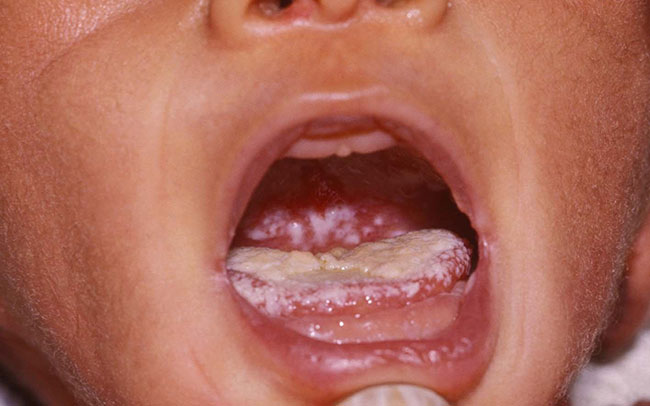
Oral thrush is a common fungal infection in the mouth. It can be easily and quickly treated if it doesn’t clear up on its own.

How do I know if my baby has thrush?

  • Look out for white spots or patches on your baby’s cheeks, gums and palate. These patches can look like milk spots, but if you rub them there will be a raw area underneath.
  • Your baby may fuss when breastfeeding or might even refuse your breast or bottle.
  • Sometimes babies get nappy rash when they have oral thrush. It might look red or bright pink with small raised spots and you might find standard nappy rash creams aren’t effective in clearing the rash.
  • If you are breastfeeding you may notice that you have thrush on your nipples, making them painful, red and cracked.

What treatment will we receive?

Your GP or Health Visitor may prescribe an antifungal treatment. The type of treatment will depend on the age of your baby. A course of treatment usually takes 7 days. If there is no improvement after a week, ask your GP for further advice.
  • If you have thrush on your breasts, the GP will prescribe medicine for you too.

How can I prevent thrush?

  • Oral thrush will usually become less of a problem as your baby’s immune system develops.
  • Take extra care when sterilising bottles, soothers and other feeding equipment.
  • If you still have thrush, wash your breasts after feeding. Use plain water, pat dry and applied any prescribed treatment to avoid further contamination.
  • To prevent re-infection, make sure you keep separate towels for your hands before and after feeding, and before and after changing your baby’s nappy.

Healthy eating after birth

Healthy eating after birth

Eating healthily after the birth of your baby is as important as it was during pregnancy. Eating a balanced diet with plenty of clear fluids helps your body to recover. Speak to your midwife, health visitor, infant feeding specialist or GP if you have specific concerns relating to weight loss, diabetes or breastfeeding.
Nutrition after pregnancy from Nutribytes

Getting practical help after birth

Getting practical help after birth

Additional resources are available to you to help you with finances, housing, infant feeding, peer support, social activities in your area, and many more. As this information is gathered for your area, this app page will include local links to help you find these resources.
Portal: Getting Practical Help in After your baby is born

What if my baby needs additional support?

What if my baby needs additional support?

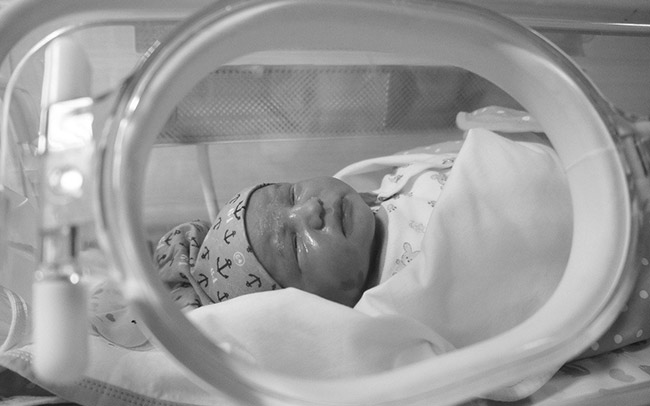
Transitional care is when you and your baby stay together in hospital with support from the hospital staff. It means that your baby is well enough to stay with you either on the post natal ward or a room near the neonatal unit. You will be in hospital with your baby. Common reasons for a baby requiring transitional care include:
  • babies born early between 33 and 35 weeks
  • babies with jaundice requiring treatment
  • babies needing antibiotic treatment
  • babies requiring extra support with their feeding.
Your baby will be reviewed regularly by one of the neonatal doctors or nurses whilst they are in transitional care and the treatment plan will be discussed with you. Some babies may need more care than can be provided on the post natal ward or in transitional care and they are admitted to the neonatal unit. The main reasons for a baby to be admitted are that they are born prematurely, have a low birth weight or have a specific medical condition which needs treatment in hospital. When your baby is admitted one of the neonatal team will be able to update you on your baby’s condition and progress. You will be able to visit your baby at any time on the neonatal unit. Babies admitted to a neonatal unit receive care according to what they need. If your baby is born extremely preterm or are very sick after delivery they may need an increased level of care. If they need specialist care your baby may need to be moved (often called transferred) to another hospital. The doctors from the neonatal unit will discuss this with you.

Paediatrician/Neonatalogist (baby doctor)

Paediatrician/Neonatalogist (baby doctor)

Paediatricians or neonatologists are doctors specialising in the care of newborn babies and children. They will be involved in your care if early (premature) delivery is anticipated or if there are likely to be concerns about the health of your baby during or after the birth.

Carpal tunnel syndrome

Carpal tunnel syndrome

What is Carpal tunnel syndrome (CTS)?

There are eight small bones called the carpal bones in the wrist. These bones form a semi-circle, and a tough band of tissue (the carpal ligament) forms a roof over these bones. This tunnel is known as the ‘carpal tunnel’. Passing through this tunnel are the tendons which move the fingers and thumb and the median nerve. When the median nerve gets compressed (squeezed or pinched) in the tunnel, it causes the symptoms of CTS. During pregnancy, the body naturally retains more fluid, and swelling of the hands is common. If some of this fluid is localised to the carpal tunnel, this leads to pressure on the median nerve causing the symptoms of CTS. Up to 62% of pregnant women develop CTS. These symptoms are also common after the birth.

What are the common symptoms?

Symptoms are commonly felt in the thumb, index and middle fingers. You may have symptoms in one or both hands. Symptoms may include:
  • pain in your wrist, palm or forearm
  • ‘pins and needles’
  • numbness
  • weakness caused poor grip or clumsiness
  • burning sensations in the fingers
  • hands may appear swollen
Symptoms may be worse at night and cause you to wake up and worse thing in the morning. This may be due to sleeping position, and/or relaxation of the muscles that act during the day to redistribute the fluid to the rest of the body.

What can you do to help yourself?

Positioning

Keep your wrists straight to avoid putting pressure on the nerve. You may find wearing a wrist splint useful at night and when resting during the day. Do not put splints on too tightly and do not wear them continuously unless advised.

Rest

Reduce all non-essential activities, such as shopping, carrying, lifting and repetititve tasks such as typing and writing.

Ice

Using an ice pack over the wrist/hand area may hellp reduce the swelling and pain. Leave for 10 minutes.

Contrast bathing

Using alternating heat and cold can also be helpful to reduce pain and swelling. You can do this by either using an ice pack and hot water bottle wrapped in a tea towel or by dipping your hands in cold or warm water. Alternate between warm and cold for 30 seconds each, for 5-6 minutes, always finishing with the cold. You can do this 3-4 times a day. Precaution: always check the water temperature before immersing your hand.

Elevation

When possible, place your wrists on pillows above the level of your heart to reduce swelling. This can be veery useful at night – remember not to sleep with your hands under your pillow.

Movement/Exercise

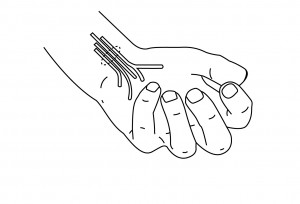
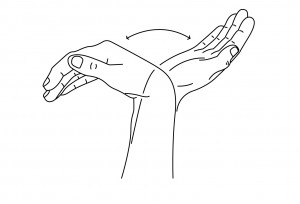
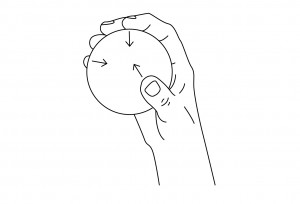
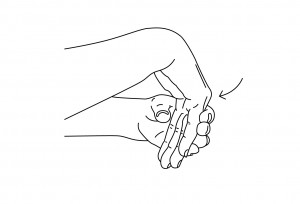
These exercises done throughout the day between rest periods may help relieve your symptoms. Aim to do the exercises at least three times every day. 1. Bend and straighten your wrists keeping your fingers straight. Hold each position for 5 seconds and repeat x10: 2. Hand squeeze. Make a release a fist (this can be done with your hands elevated). You could also squeeze a stress ball: 3. Fingers bend and straighten. Forearm upright, wrist and fingers straight. Now hook your fingers down, trying to touch the tips of your fingers to the top of your palm. Straighten again. Repeat 10 times:

General advice

Should your symptoms continue after your baby is born you should speak to your GP who may refer you for assessment and care.

Your baby’s development

Your baby’s development

Babies are learning from adults as soon as they are born. At this age, your baby will love when you chat, play, sing and read to them, even when they are too young to understand everything.

Chat

Your baby starts trying to communicate with you from day one. You can practice communicating together to build your bond and help them develop. Your baby loves the sound of your voice, so little chats throughout the day will make them happy.

Play

Your baby starts exploring the work straightaway through movement, sights and sounds. Playing helps your baby get stronger, become more coordinated and learn new things.

Sing

Babies who are exposed to and engage in music, singing and rhyming regularly with parents and carers learn to speak more easily. They have more words to express themselves and are more confident and creative. Babies like hearing songs and rhymes over and over again.

Read

Reading to your baby has many benefits long before they can read or understand words. Your voice stimulates their brain and your voice is soothing to them.

What to expect at six months

Babies develop at different rates. However, understanding what is typical ccan help you indentify speech and language problems early. By six months, children will usually:
  • Turn towards a sound/voice when they hear it.
  • Be startled by loud noises.
  • Watch your face when you talk to them.
  • Recognise your voice.
  • Smile and laugh when other people smile and laugh.
  • Make sounds to themselves, like cooing, gurgling and babbling.
  • Make noises, like coos and squeaks, to get your attention.
  • Have different cries for different needs. For example, one cry for hunger, another when they are tired.

Fatigue

Fatigue

It is not uncommon to feel very tired after the birth of your baby. Plenty of rest and a balanced diet can help you on the road to recovery: Also remember to eat foods that are rich in dietary iron (see related link below). If exhaustion persisits for more than a few days speak to your midwife or GP.

Transition to motherhood

Transition to motherhood

The myth of motherhood

Having a baby is supposed to be one of the most exciting and happy experiences you’ll ever have. Women are expected to ‘blossom’ during their pregnancy and immediately fall in love with their baby. Society views childbirth as a time for celebration, fulfilment and hope. A woman is therefore under great pressure to act and feel in this way.

The truth about motherhood

Often the reality is quite different and you may be surprised to experience feelings you hadn’t expected. Childbirth can leave you feeling exhausted and anxious, as well as shocked by the sudden changes in your life as a result of becoming a mother. Instead of the expected happiness, many women struggle with the new set of demands a baby brings, the lack of independence and routine, together with the long hours of work within the home.

The transition to motherhood

Transition to motherhood involved adapting to physical, emotional and social changes and there is little support or preparation for this in our society. Therefore: Most mothers experience difficulties adjusting to their new role and may feel overwhelmed by the demands. Myths about motherhood can create unrealistic expectations. Therefore: Unrealistic expectations lead to feelings of failure when problems occur. “I remember wishing someone had warned me how hard it was going to be at first, but then I realised that even if they had it wouldn’t have prepared me.”