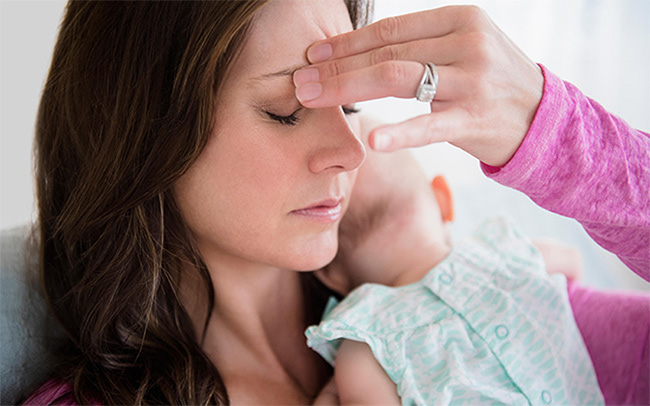
Around one in seven parents will struggle with their emotional well-being and may develop postnatal depression or anxiety within the first year after childbirth. It can start very suddenly after your baby is born or it can develop slowly. Struggling emotionally at this time can happen to anyone. It is not your fault. You may experience on-going symptoms such as:
low mood, sadness and tearfulness
anxiety, worry and tension
feeling overly tired, tearful and irritable
difficult or unexpected feelings towards your baby
poor sleep even when your baby sleeps well
feeling unable to cope or enjoy anything
thoughts that you are not a good enough parent
worrying thoughts about your baby
feelings of hopelessness
struggling to come to terms with a difficult birth.
There is no single cause for postnatal depression or anxiety. It may arise because of a distressing birth, the shock of becoming a parent or other pressures (such as your partner or financial problems).If you have been experiencing any of the above symptoms for two weeks or more, you could have postnatal depression or anxiety. It is important to seek help as soon as possible from your midwife, health visitor or GP.
Antidepressants
Your GP may prescribe you a course of antidepressant medication. These are non-addictive, however they can have side effects, such as drowsiness, dry mouth or constipation. Antidepressants are usually well-tolerated and the majority of side effects improve following the first two weeks of treatment. The medication in itself does not cure the depression, but it can list your mood efficiently to enable you to cope more effectively and to take advantage of other help. Most antidepressants take a few weeks to have any effect, so it is important not to give up too quickly if you don’t feel better straight away. If you are breastfeeding it is important that you inform your doctor so that this can be taken into consideration when choosing a suitable antidepressant.“Professionals from Children’s Centres and other healthcare services helped a lot, but the single most important thing that got me through was meeting other mums locally and spending time with them and their babies. I wasn’t alone and other people felt the same as me. With the support and companionship of each other we got through the most difficult time.”
How partners, family and friends can give support with postnatal depression
If you think someone you love could be experiencing postnatal depression, then it is important to get help both for her, and yourself if you feel you need it. Your support is invaluable and there are a number of things you can do to help her become, and then stay well.
Partners
You are perhaps the most important person in terms of helping her to become well and stay well. Hopefully when she feels better you will feel that your relationship is stronger for the experience of going through this difficult time. The suggestions above can be helpful in addition to the following:
Reassure her that she will get well. As she starts to feel better it can be helpful to point out her progress to her, to encourage her that it won’t last forever and she will feel better soon.
Reassure her of your love and support, and that you are there for her. She will probably be feeling vulnerable and unlovable at the moment. If you find it difficult to express yourself you could leave her a note, take her a cup of tea in bed, send her a text message and think of different ideas of how to show her that you care.
Ensure that she gets enough food and rest. This is important for both of you.
You could ask her if there is anything she would really like to eat, and get it at the shops, or leave a prepared meal for her to heat up if you are at work. Offer to do some of the night feeds, if you can.
Encourage her to be active. The family could all go for a walk together, and look at making small changes like eating more healthily.
Point out any improvements that you notice in her well-being. This will help to give her the encouragement and hope to continue to make positive changes in her life.
Offer her a massage. You don’t need to be an expert, you could suggest giving her a back massage or a foot massage.
Go out together as a couple. Try to arrange to go out together without your baby or children. She may not want to do this until she is beginning to feel better so it is best to wait until she is ready.
Get help if you need it at any time. Don’t keep your problems to yourself. See the related links below.
Look after yourself. It is important to think about your own health and wellbeing and some of the suggestions may be useful for you also:
“Before my wife had the baby she was fine but when the baby was a few weeks old she changed. She was either shouting at me or crying all the time and the house was a mess. I was getting blamed for everything. It wasn’t until our GP called me to explain that my wife was suffering wih postnatal depression that I realised there was a reason for her moodiness. I read up on postnatal depression and how I could help. I learnt that staying away from the house was making the situation rose and that my wife needed more support.”
Friends and relatives
Sensitively ask her what she feels she needs. She will probably have a good idea of what you can do to help her feel better.
Encourage her to talk about how she feels and ask to help. You can suggest that she approaches her midwife, health visitor or GP, or arrange to see whichever she feels that she can confide in. You could offer to go with her or arrange for them to see her at home.
Suggest that she joins a support group. Speaking to other people in a similar situation who know what she is going through can be a relief. This may not be something she wants to do at first but as things improve she may want to go.
Offer to help with childcare, to enable her to have time for herself.
Offer practical help, for example, to do the cleaning, washing, ironing or cooking to give her time to relax and get to know her baby.
Be patient, recovering from depression is a gradual process. Throughout, the early months of her feeling well again, she will probably still need your help and support.
Let her express her true feelings. Be as sympathetic as you can be and treat her doubts and fears seriously.
Find out about postnatal depression, see below for more information.
During the first week, the majority of women experience a short-lived change in emotions commonly known as baby blues. This is short period of feeling tearful and overwhelmed, often caused by a combination of exhaustion, life changes and hormones. This is very common and will only last a few days.Symptoms include:
feeling emotional and irrational
crying over seemingly small things or seemingly over nothing
feeling irritable
feeling sad or anxious
feeling physically exhausted and overwhelmed.
It is important to seek support from your family, friends and midwife during this time and try to get as much rest as possible. If you continue to feel low, or the bad feelings and thoughs get worse, speak to your health visitor or your GP.
Having a baby can be joyful, exciting and rewarding. However, mothers and fathers can be under great pressure to act and feel happy and excited during pregnancy and after birth. The reality of transitioning to parenthood is quite different and you may be surprised to experience feelings you hadn’t expected. Be assured: it is also common for new mothers or fathers to experience anxiety, depression or emotional distress.As many as one in five women experience emotional difficulties during pregnancy and in the first year after their baby’s birth. This can happen to anyone.
Perinatal positivity – a video developed by expert clinicians with local women and charities in North West London
If you are experiencing emotional difficulties during this time, it may be that you are experiencing postnatal depression and anxiety. It can occur straight after the baby is born or months later. Each woman is affected in her own particular way but some of the common causes, symptoms and advice about what helps can be found in the pages and related links below.
Portal: Mental health and wellbeing in your region
The six week postnatal check-up is recommended to ensure that you are feeling healthy and coping well. It is a chance for you to ask any questions, or address any concerns you may have.These are some of the things your GP or health visitor will ask you about:
your general wellbeing
your physical and emotional wellbeing
any medication you are taking, and if this needs reviewing
whether your bleeding has stopped and if you have had a period
how your perineum/caesarean scar is healing
how are you feeding your baby and any concerns you have with this
your contraception choices and if you require any support or information about accessing appropriate contraception.
Before the six week check, it is recommended that you think about the following:
any areas of concern that you have
any plans you may have regarding future pregnancies (the optimal time interval between birth and the next pregnancy is between 18 months and five years and another pregnancy within six months of birth increases the risk of that baby having a low birth weight and/or being born early)
the best contraceptive choice for you
the implications of any medical condition(s) that you may have experienced in or after pregnancy.
as little as five to ten minutes of deep relaxation can refresh you
you can learn relaxation techniques online
sleep when your baby sleeps
rest when your child has a daytime rest.
Sharing responsibility
where possible, share the responsibility of getting up in the night with your partner
if you’re on your own, see if a friend or relative may be prepared to have your children overnight occasionally.
Excessive tiredness
excessive tiredness or difficulty coping with tiredness can be a sign of postnatal depression. Please read the section on Your emotional wellbeing if you think you or your partner may have symptoms of postnatal depression.
Exercise is an important aspect of a healthy lifestyle and generally the time you can resume exercise is a matter of personal choice. If you’ve had a caesarean it is important to wait at least eight weeks. Most women choose to wait until after their six week postnatal check with the GP before resuming exercise. When you start exercising it is important to remember to:
stop if it hurts
stop if you have any pelvic floor concerns, eg, if you notice any leakage of urine or experience a feeling of vaginal heaviness during exercise
stop when you are tired
never exercise when you are feeling unwell.
Try to avoid high impact exercise (jogging and jumping) for at least three months after birth. High impact exercise can put unnecessary strain on muscles, joints and the pelvic floor.Find out if there are any local postnatal exercise, yoga or Pilates classes near you. This can help with motivation and provide a social outlet.Remember that each woman’s recovery after birth is different, and avoid comparing yourself to others or setting unrealistic goals. Trying to incorporate gentle exercise into your daily activities is a great start, and it’s important to have plenty of rest as well.
After you have had a baby it is important to wait until you and your partner feel happy, ready and comfortable before resuming sexual intercourse. The timing of this will be individual to each couple. Some factors may increase the time you choose to wait before having intercourse. If the birth has been traumatic, physically or mentally, it may take longer for you to feel ready to have intercourse.
Some women have reduced interest in intercourse following childbirth, particularly if breastfeeding. More often than not your libido will slowly return to what was normal for you. A lasting low libido can be a sign of postnatal depression or post-birth trauma. It can help to talk to your partner, midwife, friends, family, health visitor, or GP to see what help and support might be available.
Many women find that sex is painful after birth, and that they are less lubricated naturally than they were before. Using a lubricant can help, as can taking
it gently and communicating with your partner. If sex continues to be painful, you can
always seek support from your healthcare provider. Intimacy can take on many forms and
does not necessarily need to include penetrative vaginal intercourse. Kissing,
foreplay, cuddling, mutual masturbation, oral sex and other forms of intimate play can
be less pressured whilst helping you to connect with your partner.It is possible to become pregnant again from just three weeks after the birth even if you have not had a period and are breastfeeding, therefore it is important to consider using contraception to avoid an unplanned pregnancy. Research suggests that becoming pregnant again within 12 months of having a baby can increase the chance of your baby being small for gestation, premature or even stillborn.Some maternity units are able to supply contraception before you are discharged home from the hospital. Your midwife will discuss your options during your pregnancy as it is easier to think about these before the arrival of your baby. Babies can be time-consuming and it may be difficult to access reliable contraception once you are home. All of the methods listed below are safe whilst breastfeeding. Ask your midwife for information on what is currently available in your maternity unit.Intrauterine contraception can be inserted at a planned (elective) caesarean section. A device (coil) is inserted into your uterus after birth and can remain there providing reliable contraception for 5 to 10 years, depending on the type (hormonal or non-hormonal).An implant, which is a matchstick sized rod inserted under the skin of your upper arm, can also befitted before discharge. The implant slowly releases progestogen hormone and provides reliable contraception for 3 years. The benefit of these methods which are known as long acting reversible contraception (LARC) is that you don’t need to remember to use contraception every day and therefore they have very low failure rates. Both intrauterine contraception and implants can be removed at any time at your GP Practice or local Family Planning/Sexual Health Services.Alternatively, a six month supply of progestogen-only pills or a progestogen-only injection which provides contraception for 13 weeks can be made. The failure rates of both these methods are much higher if they are not taken exactly as recommended, for example if you forget to take pills or do not receive your next injection when it is due. Your GP practice or local Family Planning or Sexual Health Clinic can provide you with further supplies of these methods.Ask your midwife about the advantages and disadvantages of each method to help you decide which method might be suitable for you.Find further information here:Contraceptive choices after you’ve had a baby
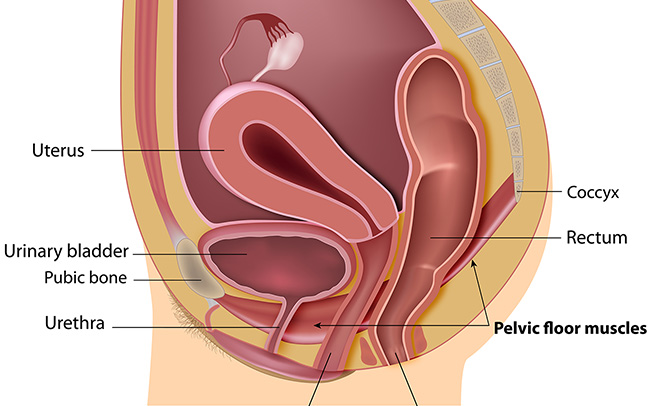
The pelvic floor muscles support your pelvic organs, stabilise the pelvic joints and are responsible for the control of bladder and bowel functions. These muscles are stretched during pregnancy and birth – which can sometimes lead to weakness or dysfunction during pregnancy and particularly after birth.Strengthening these muscles will:
maintain or improve bladder and bowel control
reduce the risk of prolapse of the pelvic organs
help to stabilise the joints of the pelvis and lower spine.
Exercises should be started as soon as your catheter (if you have had one) is removed and you have passed urine. The exercises can help reduce swelling and pain as well as treat/prevent incontinence. They should be completed at least three times a day. It can take up to three months for the muscles to regain their strength.
How to do your pelvic floor exercises
Lay or sit down comfortably and begin by imagining you are trying to stop yourself from passing wind/urine by squeezing the muscles around the back passage and vagina. Don’t do this whilst on the toilet, and don’t hold your urine as this can lead to problems with bladder function. You should work this muscle in two ways:
Hold the squeeze for a few seconds and then relax. Repeat this up to 10 times, gradually holding the squeeze for longer (up to 10 seconds).
Squeeze and release straight away. Repeat this 10 times.
Period type pains after the birth of your baby are normal and are caused by the contraction of your uterus as it returns to its pre-pregnancy size and tone. It is normal for these pains to feel stronger when you breastfeed your baby due to the effect of hormones released during a feed, causing the uterus to contract. Any severe after pains can be treated with paracetamol. Make sure you read the label, and speak to your local Pharmacist if you are unsure about this medication.If you are experiencing any symptoms of infection with your after pains see Feeling unwell.
The milk that your breasts first produce is called colostrum, and this will be present in the breast from mid-way through your pregnancy. Colostrum helps protect your baby from allergies and disease. Colostrum is concentrated breastmilk that comes in tiny amounts which is sufficient for the baby for the first three days.Around three days after birth, the colostrum changes and becomes mature milk – and this change may make your breasts feel heavy and tender. Engorgement is common and can happen when your milk “comes in” or if your breasts become over full of milk, especially when your baby is not latched on to the breast effectively. Engorgement can be relieved with frequent breastfeeding. If your breasts feel so full that your baby is unable to take the breast, try hand expressing a little of your milk before attempting to latch baby to the breast. See How to hand express.If your breasts are not relieved by feeding and hand expressing, seek help urgently. See Help with breastfeeding.Engorged breasts can progress to mastitis rapidly. Mastitis is an infection that can occur when milk ducts become blocked. Additional symptoms include a high temperature, and or lumps in your breasts that are hot, red and painful.
If you are experiencing symptoms of mastitis contact your midwife, GP or the maternity triage/assessment centre where you give birth urgently.

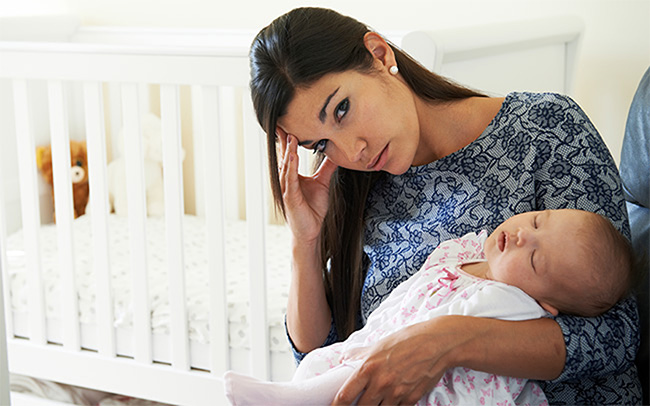 Around one in seven parents will struggle with their emotional well-being and may develop postnatal depression or anxiety within the first year after childbirth. It can start very suddenly after your baby is born or it can develop slowly. Struggling emotionally at this time can happen to anyone. It is not your fault.
You may experience on-going symptoms such as:
Around one in seven parents will struggle with their emotional well-being and may develop postnatal depression or anxiety within the first year after childbirth. It can start very suddenly after your baby is born or it can develop slowly. Struggling emotionally at this time can happen to anyone. It is not your fault.
You may experience on-going symptoms such as: